Hand Grasp Reflex: Definition, Examination, Clinical Significance, and Abnormal Findings
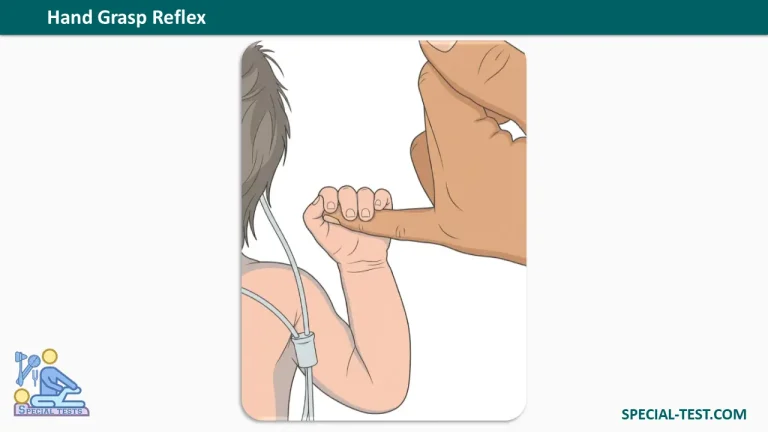
The hand grasp reflex is a primitive neonatal reflex in which an infant automatically flexes the fingers and grasps an object placed against the palm. It is part of the routine neurological examination of newborns and young infants and provides useful information about early neurological development, motor responses, and the integrity of the nervous system.
The reflex is normally strongest at birth and gradually diminishes as the infant’s nervous system matures. An absent, asymmetric, or persistent hand grasp reflex may warrant further assessment, particularly when accompanied by abnormal muscle tone, weakness, or other neurological findings.
What Is the Hand Grasp Reflex Used For?
The hand grasp reflex is primarily used to assess primitive reflex activity and the neurological function of the upper limbs in newborns and infants. Its clinical significance depends on the infant’s age, the strength of the response, and whether the reflex is symmetrical on both sides.
The main clinical applications include the following:
1. Assessment of Peripheral Nerve, Brachial Plexus, and Spinal Cord Function
The hand grasp reflex can help assess motor function in the upper limb, including the peripheral nerves and neural pathways involved in finger flexion. An absent or reduced response on one side may suggest a neurological or neuromuscular abnormality.
For example, the reflex may be reduced or absent in an infant with an upper-limb injury involving the brachial plexus, such as obstetric brachial plexus palsy. However, the reflex alone cannot determine the precise location or severity of a nerve injury.
Spinal cord lesions and other neurological disorders may also alter the response, depending on the level and extent of the injury.
2. Detection of Abnormal Persistence in Infancy
The palmar grasp reflex is a normal primitive reflex during early infancy. It typically becomes less prominent and disappears during the first several months of life, commonly by approximately 4–6 months, although reported age ranges vary.
Persistence beyond the expected developmental period may indicate delayed neurological maturation or an upper motor neuron disorder. It can be observed in infants with spastic cerebral palsy, particularly when accompanied by increased flexor tone, abnormal posturing, delayed motor milestones, or other persistent primitive reflexes.
Importantly, persistence of the reflex alone does not establish a diagnosis of cerebral palsy. The finding must be interpreted alongside the child’s developmental history and complete neurological examination.
3. Assessment of Spastic Hemiplegia
The hand grasp reflex may be asymmetric in infants with spastic hemiplegia, a form of cerebral palsy characterized by greater motor impairment on one side of the body.
The reflex may be stronger, more persistent, or otherwise different on the affected side. Comparing both hands helps the examiner identify asymmetry that may require further neurological evaluation.
Asymmetry is not specific to cerebral palsy, however. Peripheral nerve injury, brachial plexus palsy, pain, and other conditions may also cause unequal responses.
4. Recognition of a Reappearing Grasp Reflex in Adults
Although the hand grasp reflex is normal in early infancy, a similar involuntary grasping response can reappear in adults with certain brain lesions. This is known as the palmar grasp reflex, a primitive reflex that may be elicited during an adult neurological examination.
Its reappearance can indicate dysfunction of frontal lobe networks that normally inhibit primitive reflexes, particularly when lesions affect the medial frontal region or related frontal cortical pathways.
In adults, a positive grasp reflex may be associated with frontal lobe disease, including structural lesions or diffuse cerebral dysfunction. It is not specific to a single diagnosis and should be interpreted with other neurological signs and the clinical history.
How to Perform the Hand Grasp Reflex Test
The hand grasp reflex is examined separately in each hand, with the infant relaxed and comfortably supported. The examiner should use gentle stimulation and compare the responses on both sides.
Step 1: Position the Infant
- Place the infant in the supine position on a safe, firm examination surface.
- Keep the arms semiflexed and the head in the midline position, avoiding rotation to either side.
- Ensure that the infant is calm and that both upper limbs can be examined comfortably.
Step 2: Stimulate the Palm
- Gently introduce the examiner’s finger into the infant’s palm, approaching from the ulnar side.
- Alternatively, use a suitable small examination object, such as a smooth rod, provided it is safe and appropriate for the infant’s age.
- Apply gentle pressure to the palmar surface to stimulate the grasp response.
Step 3: Observe Finger Flexion
A normal response consists of involuntary flexion of the fingers around the examiner’s finger or the object.
The thumb may flex along with the fingers rather than moving into the opposition position characteristic of a voluntary grasp. The response is a primitive reflex and should not be confused with purposeful, voluntary hand function.
Step 4: Assess the Response to Gentle Traction
After the infant grasps the examiner’s finger, gentle traction may increase flexor activity in the hand and other upper-limb muscles. In some infants, this is accompanied by contraction of the arm and shoulder girdle muscles.
The examiner should never lift or suspend the infant by the grasped finger or object. The response can be evaluated safely without placing traction on the infant’s arm or shoulder.
Step 5: Compare Both Hands
Repeat the examination on the opposite side and document:
- Presence or absence of the reflex.
- Strength and consistency of finger flexion.
- Symmetry between the right and left hands.
- Associated muscle tone and any abnormal upper-limb posture.
- The infant’s age and whether the response persists beyond the expected developmental period.
What Is a Positive Hand Grasp Reflex?
A positive hand grasp reflex is the involuntary flexion of the fingers following gentle stimulation of the palm.
In newborns and young infants, this is a normal physiological response. Its interpretation depends on age and clinical context.
Normal Findings
- At birth: The palmar grasp reflex is normally present and often strong.
- During early infancy: The response gradually decreases as voluntary hand control develops.
- By approximately 4–6 months: The reflex usually disappears, although the reported timing varies among studies and infants.
The emergence of voluntary reaching and grasping accompanies the gradual integration of primitive reflex activity. Research on infant grasp reflexes describes this relationship between reflex maturation and developing motor control.
Abnormal Findings
| Finding | Possible clinical significance |
|---|---|
| Absent or markedly reduced reflex | Peripheral nerve injury, brachial plexus palsy, spinal cord involvement, or other neurological dysfunction |
| Asymmetric grasp | Unilateral neurological impairment, including brachial plexus injury or hemiplegia |
| Exaggerated response | Increased flexor activity or altered neurological control; interpret alongside other examination findings |
| Persistence beyond the expected age | Possible abnormal neurological maturation or an upper motor neuron disorder, including spastic cerebral palsy |
| Reappearance in an adult | May indicate a frontal lobe lesion or another disorder affecting cortical inhibition |
These findings are not diagnostic in isolation. The significance of primitive reflex abnormalities is age-dependent, and a complete neurological and developmental assessment is more informative than a single reflex test.
Clinical Significance of an Abnormal Hand Grasp Reflex
Hand Grasp Reflex in Obstetric Brachial Plexus Palsy
An absent or diminished grasp response may be observed in infants with peripheral nerve or brachial plexus injuries. In obstetric brachial plexus palsy, the pattern of weakness and reflex changes depends on the distribution and severity of the injury.
The hand grasp reflex should be interpreted alongside spontaneous finger movement, wrist and elbow function, muscle tone, and other neurological findings. A preserved grasp reflex does not exclude a brachial plexus injury.
Hand Grasp Reflex in Spastic Cerebral Palsy
Persistence of the palmar grasp reflex beyond the usual developmental period may occur in children with spastic cerebral palsy. It may be associated with increased flexor tone, abnormal limb posture, and delayed development of voluntary hand function.
The reflex is more informative when considered alongside developmental milestones, asymmetry, abnormal postural reactions, and other persistent primitive reflexes. Studies of high-risk infants have documented associations between persistent primitive reflexes and subsequent neurological abnormalities.
Hand Grasp Reflex in Adult Neurological Examination
In adults, an involuntary grasp response elicited by touching or stroking the palm may be considered a frontal release sign. It can occur when frontal motor networks that normally regulate primitive reflexes are impaired.
Potential associated conditions include frontal lobe lesions, certain dementias, hydrocephalus, and diffuse cerebral disorders. The response is not specific enough to establish the location or cause of a lesion without additional findings.
Research has particularly associated the grasp reflex with dysfunction involving the medial frontal cortex and cingulate region, although lateral frontal and deeper lesions may also be implicated.
PubMed
+2
Frequently Asked Questions (FAQ)
1. What is the hand grasp reflex?
The hand grasp reflex, also called the palmar grasp reflex, is a primitive reflex in which an infant involuntarily flexes the fingers around an object or finger placed against the palm.
2. At what age does the hand grasp reflex disappear?
The reflex typically diminishes during the first few months of life and usually disappears by approximately 4–6 months. There is some variation in the reported age range.
3. What does an absent hand grasp reflex indicate?
An absent or diminished response may indicate peripheral nerve dysfunction, brachial plexus injury, spinal cord involvement, or another neurological abnormality. The finding must be interpreted according to the infant’s age and the rest of the examination.
4. What does persistence of the hand grasp reflex indicate?
Persistence beyond the expected developmental period may suggest abnormal neurological maturation or an upper motor neuron disorder, including spastic cerebral palsy. It is not sufficient to diagnose cerebral palsy on its own.
5. Can the hand grasp reflex be asymmetric?
Yes. An asymmetric response may occur with unilateral neurological impairment, such as spastic hemiplegia, or peripheral nerve injury, including obstetric brachial plexus palsy.
6. Can the hand grasp reflex reappear in adults?
Yes. A grasp reflex may reappear in adults with frontal lobe dysfunction or other cerebral disorders affecting the regulation of primitive reflexes. It should be assessed alongside other neurological signs.
7. Is the hand grasp reflex the same as voluntary grasping?
No. The hand grasp reflex is an involuntary response to palmar stimulation. Voluntary grasping requires more developed motor control and purposeful interaction with objects.
References
- Schott JM, Rossor MN. The grasp and other primitive reflexes. Journal of Neurology, Neurosurgery & Psychiatry. 2003;74:558–560. PubMed
- Futagi Y, Suzuki Y, Goto M. Prospective follow-up of primitive reflex profiles in high-risk infants: clues to an early diagnosis of cerebral palsy. PubMed
- Zafeiriou DI. Primitive reflexes and postural reactions in the neurodevelopmental examination. PubMed
- The incidence of the grasp reflex following hemispheric lesion and its relation to frontal damage. PubMed
- Clinical Methods: The Suck, Snout, Palmomental, and Grasp Reflexes. NCBI Bookshelf. NCBI