Phelps Test: How to Assess Gracilis Muscle Contracture
What Is the Phelps Test?
The Phelps test is a clinical examination used to assess contracture of the gracilis muscle. It helps clinicians work out why a patient’s hip abduction is limited, specifically whether the cause is muscular tightness or joint pathology.
Because it needs no equipment and takes only a minute, it is a useful bedside test in orthopedics, pediatrics, neurology, and physical therapy.
Why Does the Phelps Test Work?
The gracilis is the only adductor of the hip that crosses both the hip and the knee joint. Because of this, its length, and therefore its tension, changes with knee position.
- With the knees extended, the gracilis is stretched and can restrict hip abduction.
- With the knees flexed, the gracilis is slackened, so any restriction it causes is reduced.
The Phelps test uses this by comparing hip abduction in both knee positions.
Phelps Test Procedure: Step by Step
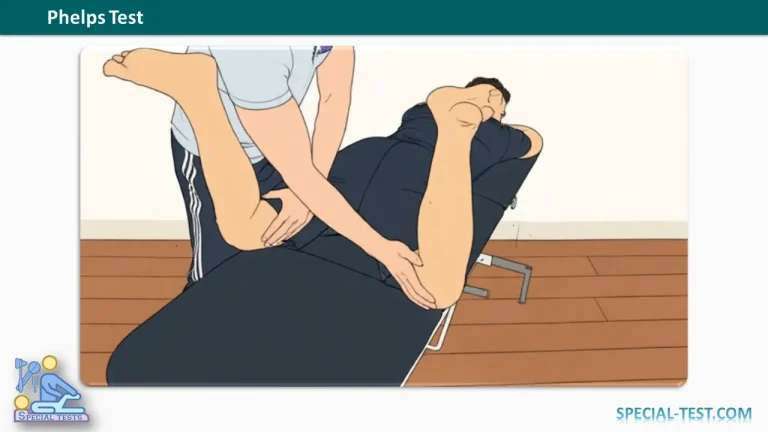
- Position the patient. The patient lies prone on the examination table with both knees fully extended.
- Abduct with knees extended. Passively abduct both legs as far as possible and note the range.
- Flex the knees. Bring both knees to 90° of flexion.
- Re-test abduction. With the knees flexed, try to abduct the hips further and compare with the first measurement.
Tip: Compare both sides, and measure the angle (for example, with a goniometer) so changes can be documented and tracked over time.
Interpreting the Results
Positive Phelps Test
If hip abduction increases after the knees are flexed to 90°, the test is positive. This indicates gracilis contracture: flexing the knees relaxes the gracilis and allows greater abduction.
Negative Phelps Test
If hip abduction does not improve with knee flexion, the gracilis is unlikely to be the cause. The limitation more likely comes from other structures, such as:
- Adductor longus
- Adductor brevis
- Joint pathology
- Capsular tightness
Further examination or imaging may be needed to identify the cause.
Key Takeaways
- The Phelps test identifies gracilis contracture as a cause of limited hip abduction.
- It compares hip abduction with the knees extended vs. flexed to 90°.
- Improved abduction with knee flexion = positive test.
- No improvement = look for other muscular, capsular, or joint causes.
Frequently Asked Questions (FAQ)
What is the Phelps test used for?
The Phelps test is used to assess contracture of the gracilis muscle. It also helps differentiate whether limited hip abduction is caused by muscular tightness rather than joint pathology.
How do you perform the Phelps test?
The patient lies prone with the knees fully extended. The examiner passively abducts both legs as far as possible, then flexes both knees to 90° and tries to abduct the hips further.
What is a positive Phelps test?
A test is positive if hip abduction increases after the knees are flexed to 90°. This indicates a gracilis contracture, because knee flexion relaxes the gracilis and allows greater abduction.
What does a negative Phelps test mean?
If hip abduction does not improve with knee flexion, the limitation is likely due to other structures, such as the adductor longus, adductor brevis, joint pathology, or capsular tightness.
Why does knee flexion change hip abduction in the Phelps test?
The gracilis crosses both the hip and the knee. Flexing the knee shortens the muscle’s path and relaxes it, so if the gracilis was the restricting structure, abduction improves.