McCarthy Test for Hip Labral Tears: How to Perform & Interpret It
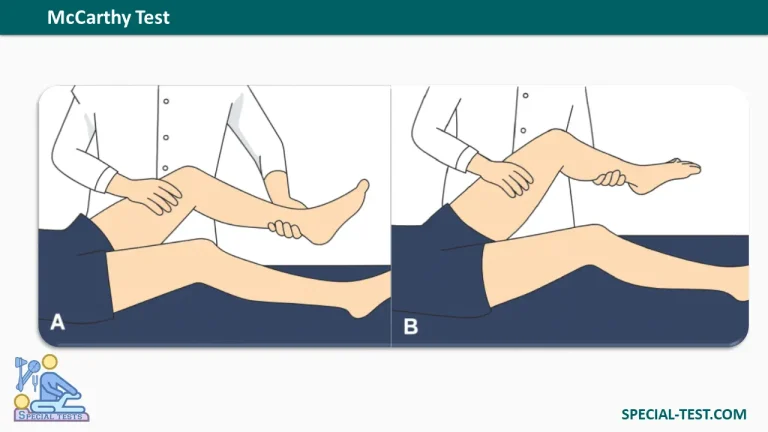
What Is the McCarthy Test?
The McCarthy test is a physical examination maneuver for evaluating acetabular labral tears and other intra-articular hip pathology. It is also known as the McCarthy hip extension test. Clinicians use it when a patient reports deep groin pain, clicking, or catching in the hip.
The test reproduces the movement arc of normal gait, which can provoke symptoms when the labrum or hip joint is damaged.
What Is the McCarthy Test Used For?
The McCarthy test is used to screen for:
- Acetabular labral tears
- Intra-articular hip pathology
- Mechanical hip dysfunction, including impingement-related problems
It is one part of a hip examination and is usually combined with other tests and imaging.
How to Perform the McCarthy Test: Step by Step
1. Position the patient
The patient lies supine on the examination table. Both hips are brought into full flexion. This places the femoral head anteriorly and tensions the acetabular labrum.
2. Start with the unaffected hip
Always examine the unaffected (“good”) hip first. This gives you a baseline for comparison and shows the patient what to expect.
3. Extend the test hip in two rotations
Keep the opposite hip fully flexed. Extend the test hip from the flexed position, twice:
- First extension: with the hip in lateral (external) rotation
- Second extension: with the hip in medial (internal) rotation
4. Repeat on the affected side
Use the same sequence on the symptomatic hip:
Hip flexion → extension in lateral rotation → extension in medial rotation
This sequence mimics the arc of movement that occurs during normal walking.
What Is a Positive McCarthy Test?
The test is positive when the maneuver reproduces either of the following:
- The patient’s characteristic pain, especially groin pain
- A palpable or audible “pop” (click) during hip extension
What Does a Positive Result Suggest?
A positive McCarthy test may indicate:
- A possible labral tear
- Intra-articular mechanical dysfunction
- Impingement phenomena within the hip joint
A positive result is suggestive, not diagnostic. Confirming a labral tear generally requires clinical correlation with the history, other hip tests (such as FADIR), and imaging such as MR arthrography.
Frequently Asked Questions (FAQ)
What is the McCarthy test used for?
It is used to assess for acetabular labral tears and other intra-articular hip pathology.
How do you perform the McCarthy test?
With the patient supine and both hips fully flexed, extend the test hip from flexion twice: first in lateral rotation, then in medial rotation. Examine the unaffected hip first, then repeat on the affected side.
What is a positive McCarthy test?
A positive test reproduces the patient’s characteristic pain, especially in the groin, and/or produces a palpable or audible pop during hip extension.
What does a positive McCarthy test mean?
It suggests a possible labral tear, intra-articular mechanical dysfunction, or impingement within the hip joint.
Why is the unaffected hip tested first?
Testing the asymptomatic hip establishes a baseline and helps distinguish normal sensations or physiological clicks from pathological findings.
Why does the test start with both hips flexed?
Full flexion places the femoral head anteriorly and tensions the acetabular labrum, setting up the movement from flexion to extension that provokes symptoms.
Can the McCarthy test diagnose a labral tear on its own?
No. It should be interpreted alongside the patient’s history, other physical examination findings, and imaging.