Normal Hip Range of Motion: Degrees for Flexion, Extension and Rotation
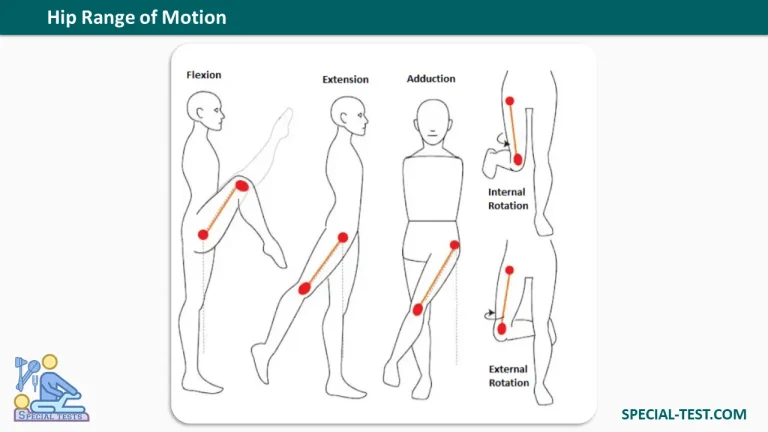
What Is Hip Range of Motion?
Hip range of motion (ROM) is how far your hip joint can move in each direction, measured in degrees with a goniometer. The hip is a ball-and-socket joint, so it moves in several planes: forward and backward, toward and away from the midline, and rotating inward and outward.
Clinicians, physical therapists, and orthopedic surgeons use hip ROM measurements to assess mobility, track recovery after injury or surgery, and spot early signs of conditions such as hip osteoarthritis or femoroacetabular impingement. Knowing the normal values helps you tell the difference between average motion and the motion you actually need for everyday life.
Average vs. Functional Hip Range of Motion
Two sets of numbers matter here:
- Average range is the typical motion a healthy hip can reach.
- Functional range is the minimum motion needed for daily activities such as walking, climbing stairs, sitting, and putting on shoes.
| Hip Motion | Average Range (degrees) | Functional Range (degrees) |
|---|---|---|
| Flexion | 115 | 90 (120 to squat) |
| Extension | 30 | Not specified |
| Abduction | 50 | 20 |
| Adduction | 30 | Not specified |
| Internal rotation | 45 | 0 |
| External rotation | 45 | 20 |
Hip Motions Explained
Hip Flexion (about 115°)
Flexion is lifting the thigh toward the chest. The average is about 115°, but daily tasks like sitting and climbing stairs need only about 90°. Deep squatting needs more, around 120°.
Hip Extension (about 30°)
Extension moves the thigh behind the body, as in the push-off phase of walking. The average is about 30°. Tight hip flexors commonly limit it.
Hip Abduction (about 50°)
Abduction moves the leg out to the side, away from the midline. The average is about 50°, with roughly 20° needed for function, such as stepping sideways or getting in and out of a car.
Hip Adduction (about 30°)
Adduction brings the leg back toward and across the midline. The average is about 30°.
Internal Rotation (about 45°)
Internal rotation turns the thigh inward. The average is about 45°, and the functional minimum is listed as 0°. Reduced internal rotation is often one of the earliest findings in hip osteoarthritis.
External Rotation (about 45°)
External rotation turns the thigh outward. The average is about 45°, with about 20° needed for functional tasks like crossing your legs or putting on socks.
Why Hip Range of Motion Matters
Limited hip motion can change how you walk, increase stress on the lower back and knees, and make routine tasks harder. Common causes of reduced ROM include:
- Hip osteoarthritis
- Femoroacetabular impingement (FAI)
- Muscle tightness in the hip flexors, hamstrings, or adductors
- Joint stiffness after injury, fracture, or surgery
- Capsular tightness or bursitis
Range of motion is also a key recovery milestone after total hip replacement, when therapists measure progress against these reference values.
How to Improve Hip Mobility
Gentle, consistent work usually helps most people:
- Stretch regularly. Target the hip flexors, glutes, and inner thighs.
- Strengthen supporting muscles. Strong glutes and core muscles stabilize the joint.
- Stay active. Walking and low-impact exercise keep the joint lubricated.
- Warm up first. Prepare the joint before exercise.
- Get assessed. If motion is painful or noticeably limited, see an orthopedic specialist or physical therapist for a proper measurement and plan.
Frequently Asked Questions (FAQ)
What is the normal range of motion for the hip?
Average values are about 115° of flexion, 30° of extension, 50° of abduction, 30° of adduction, and 45° each of internal and external rotation.
How much hip flexion do I need for daily activities?
About 90° covers most daily tasks. Deep squatting requires closer to 120°.
What is functional hip range of motion?
It is the minimum motion needed to perform everyday activities comfortably, which is lower than the average range for a healthy hip.
How is hip range of motion measured?
A clinician typically uses a goniometer to measure the joint angle at the end of each movement, either actively (you move) or passively (the clinician moves your leg).
Why is my hip internal rotation limited?
Common causes include hip osteoarthritis, impingement, and tight surrounding muscles. Because limited internal rotation can be an early sign of joint problems, persistent loss of motion deserves a professional evaluation.
Can I improve my hip range of motion?
Often yes. Targeted stretching and strengthening can help, though results depend on the cause. Structural problems may need medical treatment.
When should I see a doctor about hip stiffness?
See a clinician if stiffness is accompanied by pain, a catching or locking sensation, a limp, or if it interferes with walking, sitting, or sleeping.
References and Further Reading
- Orthofixar.com, joint range of motion reference tables and patient resources (source of the values above)
- PubMed (pubmed.ncbi.nlm.nih.gov), search “hip range of motion normative values” and “hip osteoarthritis internal rotation” for peer-reviewed studies