Wartenberg’s Sign: A Comprehensive Guide to the Ulnar Nerve Test
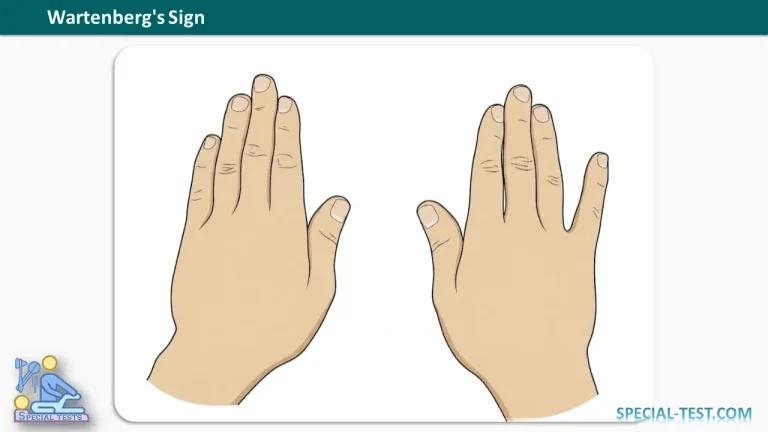
Wartenberg’s sign is a classic clinical test used in neurology and orthopedics to evaluate ulnar nerve motor weakness. First described by Robert Wartenberg in 1939, this sign remains a cornerstone in the physical examination of patients with suspected ulnar neuropathy, cubital tunnel syndrome, or Guyon’s canal compression. While the test is simple to perform, understanding its anatomical basis, proper technique, and clinical implications is essential for accurate diagnosis and appropriate management.
What Is Wartenberg’s Sign?
Wartenberg’s sign refers to the abnormal abduction (drifting away) of the little finger when a patient is asked to hold all fingers together in an extended, adducted position. This phenomenon occurs because of an imbalance between the intrinsic muscles of the hand innervated by the ulnar nerve and the extrinsic extensor muscles innervated by the radial nerve.
Specifically, the third palmar interosseous muscle, which is responsible for adducting the little finger toward the ring finger, becomes weak due to ulnar nerve impairment. Simultaneously, the extensor digiti minimi (EDM)—innervated by the radial nerve—remains intact and unopposed, pulling the little finger into abduction and extension. This creates the characteristic “escaping” posture of the fifth digit.
The sign is most conspicuous when the patient extends the fingers at the metacarpophalangeal (MCP) joints, as Wartenberg himself noted that the abduction tendency becomes increasingly evident in this position.
How to Perform the Wartenberg’s Sign Test
The test is quick, non-invasive, and can be performed in any clinical setting. The standard procedure is as follows:
- Patient Position: The patient sits with their hands resting on a table, palms facing downward (forearm pronated) and the wrist in a neutral position.
- Instruction: The examiner asks the patient to hold all fingers fully adducted (pressed together) while keeping the metacarpophalangeal (MCP), proximal interphalangeal (PIP), and distal interphalangeal (DIP) joints fully extended.
- Observation: The examiner observes the position of the little finger relative to the other digits.
A common variation involves the examiner passively spreading the patient’s fingers apart and then asking the patient to actively bring them back together (adduct). The inability to squeeze the little finger against the rest of the hand is considered a positive finding.
What Does a Positive Wartenberg’s Sign Mean?
A positive Wartenberg’s sign is confirmed when the small finger drifts away from the others into abduction during the test. This indicates an injury or dysfunction of the ulnar nerve, which supplies the intrinsic muscles responsible for finger adduction.
However, it is crucial to recognize that a positive sign does not localize the site of nerve compression. The underlying lesion could be at the cubital tunnel (elbow), Guyon’s canal (wrist), or the arcade of Struthers. Therefore, Wartenberg’s sign must be interpreted alongside other clinical findings, such as Froment’s sign, sensory testing, and electrodiagnostic studies (EMG/NCS) to determine the exact level of ulnar nerve involvement.
Clinical Significance and Differential Diagnosis
The presence of Wartenberg’s sign is a hallmark of ulnar nerve palsy. It is frequently observed in conditions such as:
- Cubital tunnel syndrome (compression at the elbow)
- Guyon’s canal syndrome (compression at the wrist)
- Ulnar neuropathy following trauma or pathologic ossification
It is important to distinguish true Wartenberg’s sign from the “pseudo Wartenberg sign” (PWS) . Recent research has identified cases where the inability to adduct the little finger occurs without underlying ulnar neuropathy. Causes of PWS include avulsion of the third volar interosseous muscle, contracture of the abductor digiti minimi (ADM), focal hand dystonia, or trauma-related dystonia. In such cases, needle electromyography (EMG) will show normal ulnar nerve function, helping to differentiate the two entities.
Additionally, Wartenberg’s sign has been rarely associated with cerebellar lesions and multiple sclerosis, where it may present as a “little finger phenomenon”. The sign should also not be confused with Wartenberg’s syndrome (also known as cheiralgia paresthetica), which is a compressive neuropathy of the superficial radial nerve and is a completely separate condition.
Frequently Asked Questions (FAQ)
Q1: Is Wartenberg’s sign the same as Wartenberg’s syndrome?
No. Wartenberg’s sign is a clinical finding of little finger abduction due to ulnar nerve weakness. Wartenberg’s syndrome refers to compression of the superficial radial nerve at the forearm, causing pain and numbness in the radial sensory distribution. They are distinct entities.
Q2: Can Wartenberg’s sign be positive without ulnar nerve damage?
Yes. This is known as the “pseudo Wartenberg sign,” which can result from muscle avulsion, contracture, or focal dystonia without actual ulnar neuropathy. Electrodiagnostic testing is useful in distinguishing true from pseudo Wartenberg’s sign.
Q3: Does a positive Wartenberg’s sign tell you where the ulnar nerve is compressed?
No. The sign indicates ulnar nerve dysfunction but does not differentiate between compression at the elbow (cubital tunnel) or the wrist (Guyon’s canal). Additional tests are required for localization.
Q4: Is Wartenberg’s sign an early or late finding of ulnar palsy?
Wartenberg noted that the sign can be an early (sometimes the first) manifestation of ulnar palsy, but it may also persist as a late sign during nerve regeneration.
Q5: What other conditions can mimic Wartenberg’s sign?
Cerebellar disease, multiple sclerosis (with cerebellar lesions), and cervical myelopathy (where it is termed the “finger escape sign”) can produce a similar posture of the little finger.
References
- OrthoFixar. Wartenberg Sign. Orthofixar.com. Available at: https://orthofixar.com/special-test/wartenberg-sign/
- Shields LB, et al. A Retrospective Study of 10 Patients Exhibiting the “Pseudo Wartenberg Sign”. Neurol Int. 2025;17(7):97. PMID: 40710900. Available at: https://pubmed.ncbi.nlm.nih.gov/40710900/
- Table 5. Test (Clinical Correlate): Wartenberg sign. NCBI/PMC. Available at: https://pmc.ncbi.nlm.nih.gov/articles/PMC8519790/table/t0005/
- Physiopedia. Wartenberg’s Sign. Available at: https://www.physio-pedia.com/Wartenberg%27s_Sign