Bunnell’s Test: A Comprehensive Guide to Assessing Hand Intrinsic Tightness
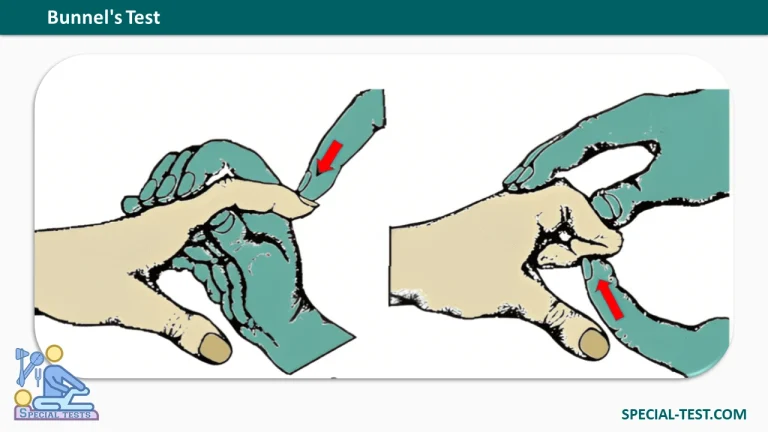
Bunnell’s Test, also known as the Bunnell Intrinsic Tightness Test or Finochietto-Bunnell Test, is a fundamental clinical examination maneuver in hand surgery and orthopedics. It is designed to differentiate between two distinct causes of restricted proximal interphalangeal (PIP) joint flexion: intrinsic muscle tightness and extrinsic muscle tightness. First described by Sterling Bunnell and colleagues in 1948, this test remains a cornerstone of hand assessment because it helps clinicians localize the source of pathology and guide treatment decisions.
What Is the Purpose of Bunnell’s Test?
The primary purpose of Bunnell’s Test is to determine whether a patient’s inability to fully flex the PIP joint originates from tightness of the intrinsic muscles of the hand (such as the lumbricals and interossei) or from tightness of the extrinsic muscles (the long flexors and extensors that originate in the forearm). By distinguishing between these two etiologies, clinicians can avoid misdiagnosis and select the appropriate conservative or surgical intervention. The test is particularly valuable in conditions such as rheumatoid arthritis, post-traumatic hand stiffness, and intrinsic-plus deformities, where identifying the correct source of restriction is essential for effective management.
How to Perform Bunnell’s Test
Performing Bunnell’s Test is straightforward and requires no specialized equipment. The examiner performs the test in two stages, manipulating the metacarpophalangeal (MCP) joint while assessing PIP joint flexion.
- First Stage – MCP Joint in Extension: The examiner passively stabilizes the patient’s MCP joint in extension (or hyperextension) and then attempts to passively flex the PIP joint. The degree of PIP flexion achieved is carefully noted.
- Second Stage – MCP Joint in Flexion: The examiner then holds the MCP joint in flexion and again attempts to passively flex the PIP joint, noting the new degree of flexion.
By comparing the amount of PIP flexion obtained in these two positions, the examiner can draw clinically meaningful conclusions about the underlying pathology.
Interpreting the Results: Positive Findings
A positive Bunnell’s Test manifests differently depending on whether the intrinsic or extrinsic muscles are tight. The interpretation is based on how PIP flexion changes when the MCP joint position is altered.
- Intrinsic Tightness (Positive for Intrinsic Contracture): If PIP flexion is easily achieved when the MCP joint is flexed but is restricted when the MCP joint is extended, the test indicates intrinsic muscle tightness. This occurs because flexing the MCP joint relaxes the intrinsic muscles (lumbricals and interossei), allowing freer PIP flexion. When the MCP is extended, the tight intrinsics are stretched over the joint, mechanically blocking PIP flexion.
- Extrinsic Tightness (Positive for Extrinsic Contracture): Conversely, if PIP flexion is easier when the MCP joint is extended but becomes restricted when the MCP joint is flexed, the finding points to extrinsic muscle tightness. In this scenario, extending the MCP joint places the extrinsic flexor tendons under greater tension, which can paradoxically improve their mechanical advantage for PIP flexion. Flexing the MCP joint slackens these extrinsic tendons, reducing their ability to flex the PIP joint.
- No Change (Articular Pathology): If the degree of PIP flexion remains the same regardless of MCP position, the restriction is likely due to articular changes such as joint stiffness, capsular contracture, tendon adhesions, or tenosynovitis, rather than muscle tightness.
Clinical Significance and Evidence Base
The biomechanical rationale behind Bunnell’s Test has been supported by both clinical observation and laboratory research. A robot-assisted study published in the Journal of Orthopaedic Research confirmed that the stiffness of the PIP joint is regulated by the position of the MCP joint, a mechanism that is amplified in hands with intrinsic muscle tightness, thereby justifying the use of the Bunnell Intrinsic Tightness Test. Another biomechanical analysis of finger extensor mechanism strains further validated the concept of the Bunnell intrinsic-tightness test, with results consistent with clinical observations and theories on the pathomechanics of claw and boutonnière deformities. These studies reinforce that Bunnell’s Test is not merely a clinical tradition but a mechanically sound diagnostic tool.
Frequently Asked Questions (FAQ)
Q1: Is Bunnell’s Test painful for the patient?
A: Bunnell’s Test is a gentle, passive examination. It should not cause sharp pain, though patients may feel stretching or mild discomfort if tightness is present. The examiner should always perform the movements slowly and respectfully within the patient’s tolerance.
Q2: Can Bunnell’s Test be used for all fingers?
A: Yes, the test can be applied to any digit. However, it is most commonly performed on the index, middle, and ring fingers, where intrinsic tightness frequently manifests. The thumb is not typically assessed with this specific maneuver due to its distinct anatomy.
Q3: What is the difference between Bunnell’s Test and the Haines-Zancolli Test?
A: Bunnell’s Test assesses the PIP joint by varying MCP position to differentiate intrinsic from extrinsic tightness. The Haines-Zancolli Test is a related maneuver used to evaluate restricted distal interphalangeal (DIP) joint flexion, determining whether it is due to tightness of the oblique retinacular ligament or capsular contracture of the PIP joint.
Q4: Does a positive Bunnell’s Test always require surgery?
A: No. A positive test identifies the source of restriction, but treatment depends on the underlying cause and severity. Conservative measures such as stretching, splinting, and hand therapy are often first-line. Surgery is considered when conservative management fails or when a fixed contracture significantly impairs function.
Q5: How reliable is Bunnell’s Test in clinical practice?
A: Bunnell’s Test is widely used and has good clinical utility, but like many manual tests, its reliability depends on examiner experience. It is best interpreted in conjunction with the patient’s history, other special tests, and imaging when necessary.
References
- OrthoFixar. Bunnell Test: Assessing Hand Intrinsic Tightness. https://orthofixar.com/special-test/bunnell-test/
- National Center for Biotechnology Information (NCBI). Selective release of the digital extensor hood to reduce intrinsic tightness in tetraplegia (Figure 1). https://www.ncbi.nlm.nih.gov/pmc/articles/PMC3104283/figure/fig1/
- PubMed. A robot-assisted study of intrinsic muscle regulation on proximal interphalangeal joint stiffness by varying metacarpophalangeal joint position. J Orthop Res. 2006;24(3):407-15. https://pubmed.ncbi.nlm.nih.gov/
- PubMed. Analysis of finger extensor mechanism strains. J Hand Surg Am. 1995;20(5):832-40. https://pubmed.ncbi.nlm.nih.gov/