Patellofemoral Crepitation Test: Technique, Interpretation & Chondromalacia Patella
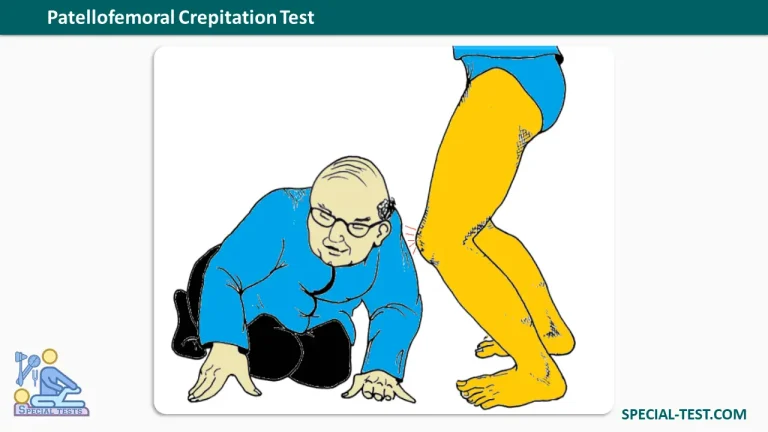
Anterior knee pain is among the most common reasons patients visit orthopedic and sports medicine clinics. Behind the kneecap, damage to the articular cartilage of the patella (chondromalacia patellae) is a frequent cause. Imaging has its place, but a careful physical examination remains the foundation of diagnosis. One simple, equipment-free bedside maneuver is the patellofemoral crepitation test. This article explains what the test is used for, how to perform it step by step, and how to interpret a positive or negative result.
What Is the Patellofemoral Crepitation Test Used For?
The patellofemoral crepitation test is used in the clinical evaluation of chondromalacia patellae, especially grades II and III. In chondromalacia, the cartilage under the kneecap softens, fibrillates, and may fissure. This roughens the gliding surface between the patella and the femoral trochlea. During loaded knee flexion, these rough surfaces can produce an audible or palpable grinding sensation known as crepitus.
Chondromalacia is commonly graded using the Outerbridge classification, which describes cartilage change from softening and swelling (grade I) to fissuring (grade II and III) and exposed bone (grade IV) (Outerbridge, J Bone Joint Surg Br, 1961). Moderate-grade lesions are where this test is most informative.
How to Perform the Patellofemoral Crepitation Test
- Position: The examiner kneels in front of the patient, close enough to hear the knee clearly. The examiner may rest a hand over the patella to feel for grinding.
- Movement: The patient is asked to crouch down or perform a deep knee bend.
- Listening: The examiner listens for sounds coming from behind the kneecap (retropatellar) during the movement.
- Repetition: The patient repeats the deep knee bend several times, so harmless noises can be told apart from pathological ones.
Performing the test on both knees allows the examiner to compare the symptomatic side with the asymptomatic one.
Interpreting the Result
Positive Test
A positive test is crepitation, often described as a “snowball crunch” sound, that persists across repeated deep knee bends. This pattern suggests significant retropatellar cartilage damage, typically chondromalacia grade II or III. Crepitus that is accompanied by pain is more clinically meaningful than crepitus alone.
Benign Cracking
Painless cracking or popping is very common and has no diagnostic significance. It occurs in almost everyone during the first or second deep knee bend. That is why the patient should perform several repetitions: benign sounds usually decrease in intensity with repetition, while crepitation from cartilage damage tends to persist.
Negative Test
If no audible retropatellar crepitation is present, the examiner can reasonably conclude that severe retropatellar cartilage damage is unlikely.
Limitations and Clinical Context
No single clinical test is perfect. Studies of patellofemoral pain tests report variable sensitivity and specificity, and findings should never be interpreted in isolation (Nijs et al., Manual Therapy, 2006; Cook et al., Physiotherapy, 2012). The crepitation test works best as part of a full knee examination that includes:
- History of pain on stairs, squatting, or prolonged sitting
- Patellar alignment and tracking
- Patellar compression and grind tests
- Quadriceps strength and flexibility assessment
- Assessment for effusion and tenderness around the patellar facets
Persistent symptoms, a history of trauma, or suspected structural injury warrant imaging such as X-ray or MRI, and in selected cases arthroscopic evaluation. Crepitus can also be a normal variant in people without pain, so clinical correlation is essential.
Key Takeaways
- The patellofemoral crepitation test screens for chondromalacia patellae, mainly grades II and III.
- The patient performs repeated deep knee bends while the examiner listens behind the patella.
- A persistent “snowball crunch” suggests significant cartilage damage.
- Painless cracking that fades with repetition is usually insignificant.
- Absent crepitus makes severe retropatellar cartilage damage unlikely.
Frequently Asked Questions (FAQ)
1. What does the patellofemoral crepitation test check for?
It helps evaluate cartilage damage behind the kneecap, particularly chondromalacia patellae of grades II and III.
2. Is knee cracking always a sign of chondromalacia?
No. Painless cracking is common, especially during the first or second deep knee bend, and generally has no significance.
3. Why does the patient perform several deep knee bends?
Repetition helps distinguish benign noises, which tend to fade, from true crepitation caused by cartilage damage, which persists.
4. What does a “snowball crunch” sound mean?
It describes the coarse grinding or crunching sound that suggests roughened retropatellar cartilage, consistent with moderate to severe chondromalacia.
5. Can the test rule out cartilage damage?
A negative test, with no audible retropatellar crepitation, suggests severe cartilage damage is unlikely. It does not exclude mild changes or other causes of anterior knee pain.
6. Is the test painful?
It involves a deep knee bend, so patients with anterior knee pain may feel discomfort. The movement should be performed within a tolerable range.
7. Do I need an MRI if the test is positive?
Not always. Imaging is considered when symptoms persist, the diagnosis is unclear, or injury is suspected. Your orthopedic surgeon will decide based on your full examination.
References
- Outerbridge RE. The etiology of chondromalacia patellae. J Bone Joint Surg Br. 1961;43-B:752-757. (PubMed)
- Nijs J, Van Geel C, Van der Auwera C, Van de Velde B. Diagnostic value of five clinical tests in patellofemoral pain syndrome. Man Ther. 2006;11(1):69-77. (PubMed)
- Cook C, Mabry L, Reiman MP, Hegedus EJ. Best tests/clinical findings for screening and diagnosis of patellofemoral pain syndrome: a systematic review. Physiotherapy. 2012;98(2):93-100. (PubMed)
- Orthofixar.com: add internal links to your related articles on knee examination and anterior knee pain.