Garrick Test for Popliteus Tendinopathy: How to Perform It and Read the Result
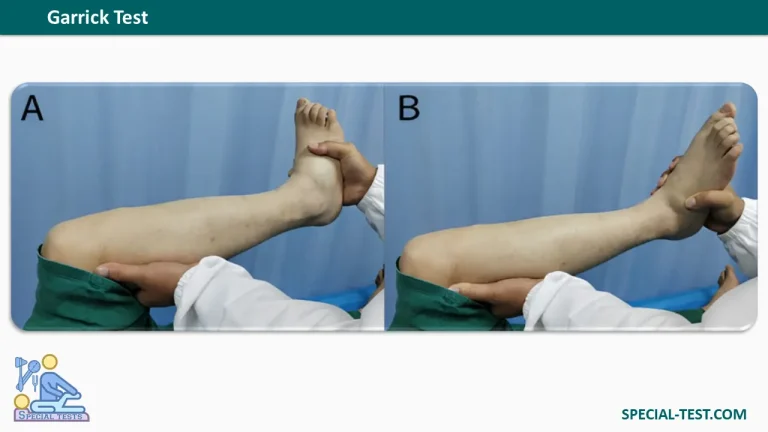
Pain at the back or outer side of the knee is easy to misread. The popliteus is a small, deep muscle in this area, and it is often overlooked. The Garrick test is a simple bedside maneuver that helps clinicians decide whether it is the source of the pain.
What Is the Garrick Test Used For?
The Garrick test is a provocative physical examination test. Its purpose is to help identify the popliteus muscle as the cause of knee pain. That makes it useful when someone has posterolateral knee pain and the clinician suspects popliteus tendinopathy, also called popliteus tendinitis.
Popliteus tendinopathy is rare and poorly described, and it can be mistaken for other knee problems. Posterior knee pain and tenderness also occur with meniscus tears, ligament injuries and strains of the posterior calf muscles, which is why a targeted test matters. A PubMed-indexed clinical review notes that recognizing this condition correctly matters because a missed diagnosis can lead to unnecessary surgery.
Why the Popliteus Matters
The popliteus sits at the back of the knee and is part of the posterolateral corner. It helps stabilize the joint and is described as the muscle that “unlocks” the knee as it begins to bend. Overuse, repeated rotational strain, a previous knee replacement and other causes can irritate its tendon. A review of the literature also describes popliteus problems after total knee arthroplasty (the muscle-tendon unit is a valuable part of the native knee’s posterolateral stability).
How to Perform the Garrick Test
- Position the patient. The patient is seated or lying supine.
- Flex the joints. The hip and knee are both flexed to 90°.
- Rotate actively. The patient actively rotates the lower leg, as described in the references below.
- Add resistance. The examiner resists the motion while watching for pain.
Descriptions of the exact rotation direction differ slightly between sources. A 2022 study of arthroscopic treatment describes the maneuver as active tibial rotation against resistance with the hip and knee flexed to 90°. Follow the version taught in your clinical training or protocol.
What Is a Positive Result?
The test is positive when pain occurs during the maneuver at the location of the popliteus muscle or tendon, typically in the posterolateral corner of the knee. In one published case report, the test reproduced the patient’s posterolateral knee pain and later turned negative as the muscle healed.
Limitations of the Test
No single test confirms popliteus tendinopathy. Clinicians combine the Garrick test with a history, palpation along the proximal tendon and the other knee tests. A PubMed-indexed review explains that the diagnosis rests mainly on history and examination, with tenderness along the proximal tendon and pain on resisted external rotation. When the picture is unclear, imaging helps: MRI is widely used to diagnose popliteus tendon tears, and dynamic ultrasound can also be useful.
Treatment Overview
Treatment is usually conservative. Physical therapy that strengthens the quadriceps eccentrically, plus NSAIDs, helps most patients, and stubborn cases may need a local corticosteroid injection. For recurrent, refractory cases, arthroscopic treatment of the popliteus tendon has been studied. See a healthcare professional for an accurate diagnosis rather than relying on one test.
Frequently Asked Questions (FAQ)
What is the Garrick test?
It is a physical examination maneuver used to evaluate the popliteus muscle and tendon as a source of knee pain.
What does a positive Garrick test mean?
Pain at the popliteus muscle or tendon during the maneuver suggests popliteus involvement, such as popliteus tendinopathy. It supports the diagnosis but does not prove it.
Which position is used for the test?
The patient is seated or supine with the hip and knee both flexed to 90°.
Can the Garrick test diagnose popliteus tendinopathy alone?
No. It is combined with history, palpation, other knee tests and sometimes ultrasound or MRI.
What else can cause pain at the back or outer knee?
Meniscus tears, ligament injuries and strains of the muscles behind the knee can all cause similar pain.
How is popliteus tendinopathy treated?
Most cases respond to physical therapy and anti-inflammatory medication. Persistent cases may need an injection or, rarely, surgery.
Should I do this test on myself?
It is meant for clinical use. If you have ongoing knee pain, see a doctor or physiotherapist.
References
- Chen B, Liu H, Wang H. Arthroscopic Treatment of Popliteus Tendinitis Using the Accessory Portal. Frontiers in Surgery. 2022;9. https://doi.org/10.3389/fsurg.2022.860300
- PubMed: Popliteus tendinitis, diagnosis and management. https://pubmed.ncbi.nlm.nih.gov/20086537
- PMC: Popliteus tendon dysfunction after total knee arthroplasty (systematic review). https://pmc.ncbi.nlm.nih.gov/articles/PMC10476413
- PMC: Partial isolated tear of the popliteus tendon (CARE case report). https://pmc.ncbi.nlm.nih.gov/articles/PMC10508435
- Garrick J, Webb D. Popliteus tendon dysfunction following total knee arthroplasty. J Arthroplasty. 1995;10(4):543-5.