Patellar Apprehension Test: Technique, Positive Sign & Accuracy
What Is the Patellar Apprehension Test?
The patellar apprehension test is a physical examination maneuver used to assess patellar instability. It checks whether the kneecap (patella) is likely to dislocate or subluxate laterally, meaning toward the outer side of the knee.
Lateral patellar dislocation is a common cause of anterior knee pain and giving-way episodes, especially in active adolescents and young adults. After a first dislocation, the medial restraints, particularly the medial patellofemoral ligament (MPFL), are often injured. This leaves the patella prone to further episodes. The apprehension test is a quick, low-cost bedside tool that helps clinicians decide whether instability is the problem and whether further work-up is needed.
What Is the Patellar Apprehension Test Used For?
Clinicians use the test to:
- Confirm suspected lateral patellar instability
- Help distinguish instability from other causes of anterior knee pain
- Support the decision to order imaging, such as X-ray or MRI
- Guide referral to an orthopedic or sports medicine specialist
How to Perform the Patellar Apprehension Test
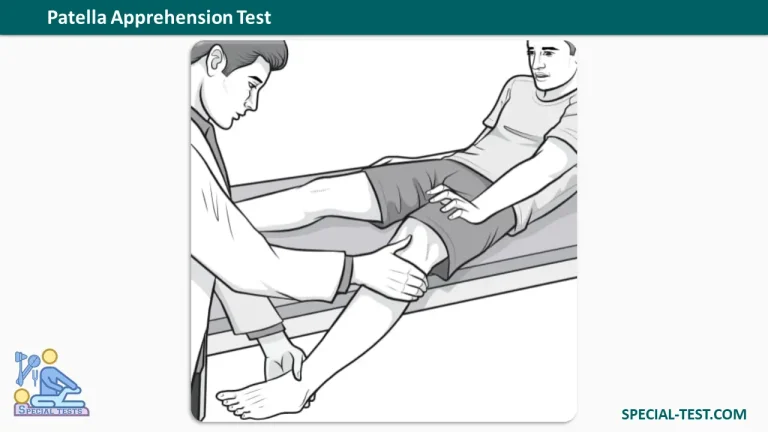
- Position the patient. The patient lies supine with the affected knee extended and relaxed.
- Apply pressure. The examiner places a thumb or hand against the medial aspect of the patella. Using slow, moderate pressure, the examiner pushes the patella in a lateral direction.
- Observe the reaction. Watch the patient’s face and body language. The test is judged mainly by the patient’s response, not just by how far the patella moves.
Practical tips:
- Keep the pressure gradual and controlled. A sudden or forceful push can cause pain and may provoke an actual dislocation.
- Make sure the quadriceps is relaxed, because a tense muscle can hide the response.
- Test both knees and compare, since normal laxity differs between people.
- Some clinicians perform the test with the knee slightly flexed, so the patella sits in the trochlear groove. The technique here uses the extended position.
What Is a Positive Result?
The test is positive when the patient:
- Expresses apprehension, for example by saying “it feels like it will pop out”
- And/or tries to move the affected knee away from the pressure, or tenses the quadriceps to protect the joint
A positive sign means the patient senses impending dislocation. This suggests lateral patellar instability, often related to deficient medial soft-tissue restraints. Pain alone, without apprehension, is a less specific finding and should be interpreted with caution.
Patellar Apprehension Test Accuracy
The reported diagnostic accuracy is:
| Measure | Value |
|---|---|
| Sensitivity | 100% |
| Specificity | 88% |
High sensitivity means a negative test makes patellar instability unlikely. A specificity of 88% means a positive test is fairly reliable but can still produce false positives. These figures come from the published study cited below. Such results often come from small samples and can differ in other populations or examiners. The test should therefore be interpreted together with the patient’s history, such as previous dislocations, and with the rest of the knee examination. Imaging is used when needed.
Limitations to Keep in Mind
- The test depends on the patient’s reaction, so it is partly subjective.
- Anxiety, pain, and guarding can affect the result.
- It does not show the cause of instability. Trochlear dysplasia, patella alta, malalignment, ligament injury, and generalized laxity are assessed separately.
- It is a screening and supportive test, not a stand-alone diagnosis.
Frequently Asked Questions (FAQ)
1. What is the patellar apprehension test used for?
It assesses whether the kneecap is likely to dislocate laterally, which makes it a key test for patellar instability.
2. How do you perform the patellar apprehension test?
With the patient supine and the knee extended, the examiner applies slow, moderate pressure to the medial edge of the patella, pushing it laterally while watching the patient’s reaction.
3. What is a positive patellar apprehension test?
A positive test is when the patient shows apprehension, feels the kneecap may dislocate, or tries to pull the knee away from the pressure.
4. How accurate is the patellar apprehension test?
The cited study reports 100% sensitivity and 88% specificity. Results can vary, so clinicians combine the test with history, examination, and imaging.
5. Is the test painful?
It should cause little pain when done gently. The key finding is the feeling of apprehension, not pain.
6. Can a negative test rule out patellar instability?
Given the reported high sensitivity, a negative result makes instability less likely. Persistent symptoms still need clinical follow-up.
7. Who should perform the test?
A trained clinician, such as an orthopedic surgeon, sports physician, or physiotherapist, should perform it, because too much force can provoke a dislocation.
8. What happens after a positive result?
The clinician may order imaging, such as X-ray or MRI, to look for structural causes and injury. Treatment can range from physiotherapy and bracing to surgery, depending on the case.
References
- PubMed: https://pubmed.ncbi.nlm.nih.gov/19193601/
- Orthofixar.com: add the link to the relevant Orthofixar article on patellar instability or knee examination here.