Knee Anterior Drawer Test: How to Perform It, Results & Accuracy
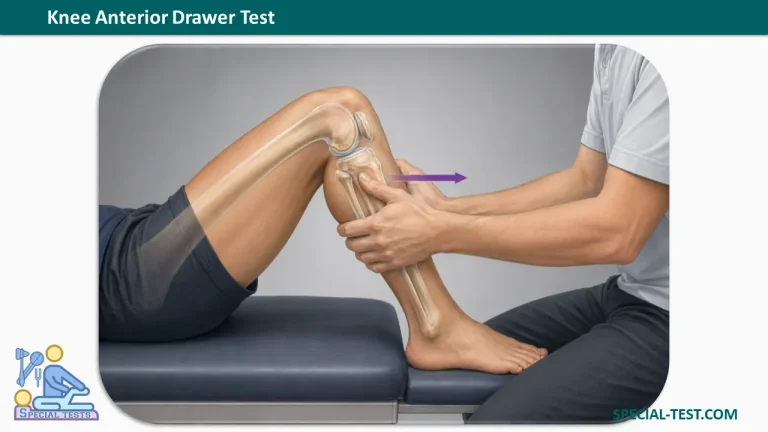
Knee injuries are common in sports and everyday life, and the anterior cruciate ligament (ACL) is one of the structures most often hurt. The knee anterior drawer test is a hands-on orthopedic exam that clinicians use to check whether the ACL is damaged. This guide explains what the test is for, how it is done, what a positive result means, and how reliable it is.
What Is the Knee Anterior Drawer Test Used For?
The anterior drawer test evaluates the integrity of the anterior cruciate ligament (ACL). The ACL is a key stabilizer of the knee. It stops the shinbone (tibia) from sliding too far forward relative to the thighbone (femur). By gently trying to move the tibia forward, the examiner can see whether the ligament is holding the joint steady.
The test helps identify both full (complete) and partial ACL tears. It is one part of a complete knee exam and is usually combined with other tests, a patient history, and often imaging, so the clinician can reach an accurate diagnosis.
How to Perform the Knee Anterior Drawer Test
The test is done with the patient lying on an exam table. It follows a simple sequence:
- Position the knee. The patient lies on their back with the knee bent between 60 and 90 degrees, and the foot resting flat on the exam table.
- Place the hands. The examiner places both hands behind the upper part of the tibia, just below the knee.
- Apply the force. While the foot stays on the table, the examiner tries to pull the tibia forward (anteriorly).
- Compare and observe. The examiner notes how far the tibia moves and how the movement feels, ideally comparing it with the uninjured knee.
For a step-by-step demonstration, see the Knee Anterior Drawer Test page on Orthofixar.
What Is a Positive Result?
The test is positive when there is increased forward displacement of the tibia with the foot in a neutral position. A positive result suggests the ACL is damaged or no longer working properly.
The amount of displacement is graded by severity:
| Grade | Tibial displacement |
|---|---|
| Grade I | About 5 mm |
| Grade II | 5–10 mm |
| Grade III | More than 10 mm |
Higher grades indicate greater looseness of the ligament, which can point to a more severe injury.
How Accurate Is the Anterior Drawer Test?
Published data show a wide range of accuracy for this test:
- Sensitivity: 18–92%
- Specificity: 78–98%
Sensitivity is the test’s ability to correctly detect an ACL tear, and specificity is its ability to correctly rule out one. The wide range in sensitivity means a negative result does not completely exclude an ACL injury. Accuracy can vary with factors such as the examiner’s experience, patient muscle guarding, pain and swelling, and whether the injury is acute or chronic. This is why clinicians rarely rely on one test alone and often confirm findings with additional exams or MRI. Research on the test can be found through NCBI PubMed Central.
When to See a Doctor
See a healthcare professional if you have knee pain after a twisting injury, a “pop” at the time of injury, swelling, or a feeling that your knee gives way. The anterior drawer test should be performed and interpreted by a trained clinician, not used for self-diagnosis.
Frequently Asked Questions (FAQ)
What does the anterior drawer test check for?
It checks the integrity of the anterior cruciate ligament (ACL) and helps detect full or partial tears.
At what angle is the knee positioned during the test?
The knee is bent between 60 and 90 degrees, with the foot resting flat on the exam table.
What does a positive anterior drawer test mean?
A positive test means the tibia moves forward more than expected. This suggests ACL damage.
How is the anterior drawer test graded?
Grade I is about 5 mm of displacement, Grade II is 5–10 mm, and Grade III is more than 10 mm.
How accurate is the anterior drawer test?
Reported sensitivity ranges from 18% to 92%, and specificity from 78% to 98%.
Can the test miss an ACL tear?
Yes. Because sensitivity can be low, a negative result does not fully rule out an ACL injury. Further testing may be needed.
Is the anterior drawer test painful?
It can be uncomfortable, especially right after an injury when the knee is swollen or sore. A clinician will perform it gently.
Do I need an MRI after a positive test?
Often, yes. Imaging is commonly used to confirm the diagnosis and check for other injuries. Your doctor will advise you.