Hughston Plica Test: How to Perform It and What a Positive Result Means
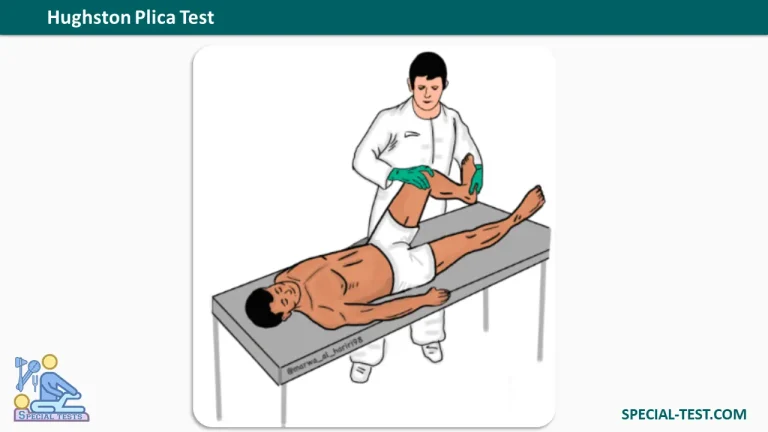
Anterior or medial knee pain that comes with clicking, catching, or a snapping sensation is not always a meniscus or cartilage problem. Sometimes a thickened fold of joint lining, called a plica, is the cause. The Hughston Plica Test is a physical examination maneuver clinicians use to check for plica syndrome of the knee.
What Is the Hughston Plica Test Used For?
The Hughston Plica Test is used to screen for mediopatellar plica syndrome, a painful condition in which a normally harmless synovial fold becomes irritated and inflamed. The medial plica, also called the medial shelf, runs from the medial wall of the knee joint around the medial femoral condyle and attaches to the synovium around the infrapatellar fat pad. After injury, overuse, or a sudden increase in activity, it can thicken and lose elasticity. It then rubs over the femoral condyle during movement and causes pain.
Plica syndrome is hard to diagnose because it produces nonspecific aching medial knee pain, locking, and catching that resemble a medial meniscal injury. This is why hands-on tests like the Hughston Plica Test are part of the workup.
How to Perform the Hughston Plica Test
- Position the patient. The patient lies supine (on their back) with the knee relaxed and extended.
- Place the first hand. The examiner grasps around the knee from the anterolateral side. The heel of the hand presses the patella medially, while the fingers palpate the medial femoral condyle.
- Place the second hand. The examiner holds the patient’s heel and internally rotates the lower leg.
- Move the knee. While keeping medial pressure on the patella, the examiner repeatedly flexes and extends the knee.
A published description of the test notes that the pain or popping is typically found in the range of 30 to 60 degrees toward extension.
What Is a Positive Result?
A positive test produces a painful, audible, or palpable “popping” or snapping as the plica is pushed against the medial femoral condyle. This suggests mediopatellar plica syndrome. The popping is what the examiner is looking for, and it should reproduce the symptoms the patient came in with.
How Accurate Is Plica Testing?
The Hughston test is usually used alongside other plica tests and imaging. Research on plica examination tests has mostly studied the closely related medial patellar plica test, which is not identical to Hughston’s maneuver. A systematic review and meta-analysis on PubMed found that the medial patellar plica physical examination test had a pooled sensitivity of 0.90 and specificity of 0.89, similar to ultrasound. The same review found MRI less accurate, with a sensitivity of 0.77 and specificity of 0.58. The authors rated the methodological quality of the studies as moderate.
Plica syndrome can also mimic other conditions. A prospective PubMed-indexed study found that an isolated medial patellar plica can produce symptoms and signs similar to a medial meniscal lesion. A positive plica test should therefore be interpreted together with the full history, the exam, and imaging when needed.
What Happens After a Positive Test?
A positive result is a clinical clue, not a final diagnosis. Management of medial plica syndrome centers on physiotherapy and quadriceps strengthening, often with NSAIDs. If symptoms persist despite conservative care, an orthopedic specialist may discuss further options, including arthroscopic evaluation. Anyone with ongoing knee pain, locking, or swelling should be evaluated by a qualified healthcare professional rather than self-diagnosing.
Frequently Asked Questions (FAQ)
What is the Hughston Plica Test?
It is a clinical special test used to assess for plica syndrome of the knee, specifically mediopatellar plica irritation.
Is the Hughston Plica Test painful?
It may reproduce the patient’s usual pain, since pain or popping is the finding the examiner is looking for. A mild or uncomfortable sensation is common.
What does a positive Hughston Plica Test mean?
A painful, audible, or palpable pop during knee flexion and extension suggests mediopatellar plica syndrome.
Can the Hughston Plica Test confirm plica syndrome on its own?
No. It supports the diagnosis, but clinicians also consider the patient’s history, other examination findings, and imaging such as ultrasound or MRI to rule out meniscal tears or cartilage problems.
Is the test more reliable than MRI?
For the related medial patellar plica test, a systematic review reported better diagnostic accuracy than MRI. This result applies to that specific test and not strictly to Hughston’s maneuver.
What other conditions feel like plica syndrome?
Medial meniscal tears, patellofemoral pain, pes anserine bursitis, and cartilage injuries can cause similar symptoms.
How is plica syndrome treated?
Initial treatment is usually conservative: activity modification, physiotherapy, quadriceps strengthening, and anti-inflammatory medication. Persistent cases may be assessed for surgical options by an orthopedic specialist.
Can I perform the test on myself?
The test needs controlled hand placement and knee movement, so it is best done by a trained clinician, not as a self-test.
References
- Clinical Tests for the Musculoskeletal System, 3rd Edition.
- PubMed: Diagnostic test accuracy of clinical and radiological assessments for medial patella plica syndrome: a systematic review and meta-analysis
- PubMed: Medial patellar plica vs. medial meniscal lesion symptoms and signs
- PubMed Central: Hughston’s plica test description (Fig. 3)
- OrthoFixar (orthofixar.com): Plica Syndrome Test page.