Dancing Patella Test: How to Detect Knee Effusion on Physical Examination
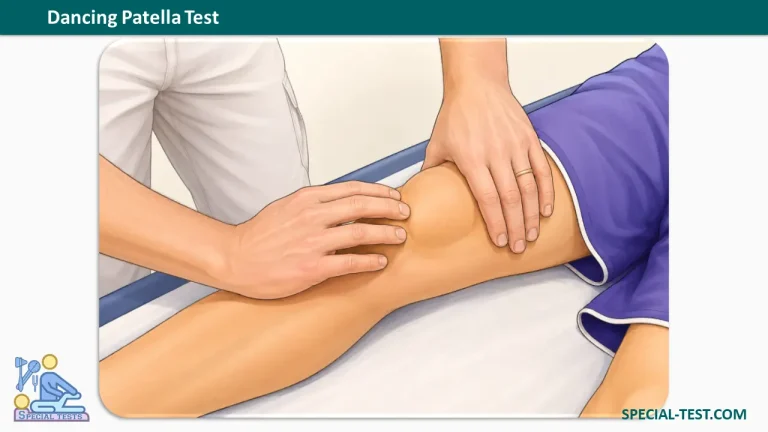
The dancing patella test, also called the patellar tap or ballottement test, is a simple bedside maneuver for finding fluid inside the knee joint. It needs no equipment and takes less than a minute, so it is a staple of the musculoskeletal exam in orthopedics, sports medicine, rheumatology, and primary care.
What Is the Dancing Patella Test Used For?
The test is used to detect knee effusion, an abnormal collection of fluid within the knee joint capsule. Effusion is a sign, not a diagnosis. It can be caused by:
- Acute trauma such as ligament tears, meniscal injury, or fractures
- Hemarthrosis (blood in the joint)
- Osteoarthritis flares
- Inflammatory arthritis, such as rheumatoid arthritis or gout
- Septic arthritis, which is a medical emergency
Finding an effusion early helps the clinician decide on imaging, joint aspiration, or urgent referral.
How to Perform the Dancing Patella Test
- Position the patient. The patient lies supine with the knee extended and the quadriceps relaxed. The test can also be done standing.
- Expose the knee. Look for visible swelling and loss of the normal contours around the patella.
- Empty the suprapatellar pouch. With one hand, sweep from proximal to distal over the thigh, just above the kneecap. This pushes fluid from the suprapatellar pouch into the space behind the patella.
- Press the patella down. With the other hand, press the patella firmly toward the femur, or move it gently medially and laterally with slight pressure.
- Feel the response. In a normal knee, the patella sits firmly against the femoral groove. With effusion, it floats on a layer of fluid.
Tip: Compare with the opposite knee, and keep the quadriceps relaxed, since tension can mask the finding.
What Is a Positive Result?
A positive test is a resilient resistance: the patella springs back, or “dances,” when pressed down and released. This is abnormal and suggests an effusion. A clear tap or click as the patella contacts the femur is the classic description.
Limitations and Clinical Pearls
The dancing patella test works best with moderate to large effusions. Small effusions can be missed, because there may not be enough fluid to float the patella. For small collections, clinicians often use the bulge (stroke) sign, which can pick up much smaller volumes of fluid.
Consider these points when interpreting the result:
- A negative test does not exclude a small effusion.
- A positive test does not identify the cause. Combine it with history, other special tests, and imaging when needed.
- Severe swelling with fever, warmth, redness, and pain on movement should prompt urgent evaluation for septic arthritis.
- Obesity, thick soft tissue, or poor patient relaxation can reduce accuracy.
Studies on the diagnostic value of history and physical examination in knee effusion, including work by Kastelein and colleagues in Archives of Physical Medicine and Rehabilitation, support using several clinical signs together rather than relying on one test. You can find these and related studies by searching PubMed for “knee effusion physical examination accuracy.” For more orthopedic examination guides, visit Orthofixar.com.
Frequently Asked Questions (FAQ)
What is another name for the dancing patella test?
It is also called the patellar tap or patellar ballottement test.
What does a positive dancing patella test mean?
A positive result, where the patella rebounds against resistance, indicates fluid in the knee joint, known as knee effusion.
Is the dancing patella test painful?
Usually not. It may be uncomfortable if the knee is acutely injured or inflamed, so the examiner should apply gentle pressure.
Can the test detect a small effusion?
Not reliably. It is better for moderate to large effusions. The bulge sign is more sensitive for small amounts of fluid.
Does a positive test mean I need surgery?
No. Effusion has many causes, and most are managed without surgery. Your doctor may order an X-ray, MRI, ultrasound, or joint aspiration to find the cause.
When should I see a doctor for a swollen knee?
See a doctor if swelling follows an injury, lasts more than a few days, or comes with fever, redness, warmth, or trouble bearing weight. Seek urgent care if you suspect infection.
Can I perform this test on myself?
It is difficult to do accurately on yourself. A trained clinician should perform and interpret it.