Oppenheim Test: A clinical guide to purpose, step-by-step technique & result interpretation
What is the Oppenheim test?
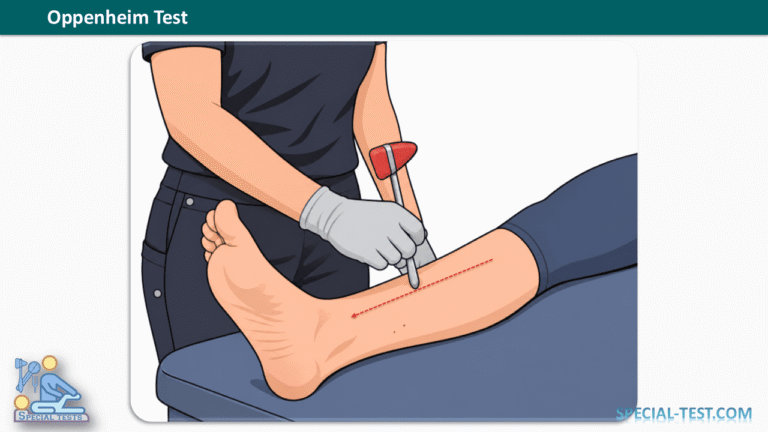
The Oppenheim test is a bedside neurological maneuver that looks for an extensor plantar response, one of the clinical signs associated with dysfunction of the corticospinal or pyramidal motor pathways. Instead of stroking the sole as in the Babinski test, the examiner stimulates the skin and underlying tissues along the tibia. It is an alternative way to look for the same pattern of great-toe extension. It is not a diagnostic test for a particular disease and cannot, on its own, confirm a brain or spinal cord lesion.
Why the Oppenheim Test matters?
Upper motor neurons participate in voluntary movement and normally regulate spinal reflex circuits. Damage to these descending pathways can be associated with weakness, increased muscle tone, brisk tendon reflexes, clonus and an abnormal plantar response. An Oppenheim response therefore contributes to neurological localization rather than identifying a single cause. Potential clinical contexts include stroke, spinal cord disease, demyelinating disorders, traumatic central nervous system injury and selected motor neuron disorders. Age, cooperation and the complete examination alter the meaning of the observation.
How to perform the Oppenheim test?
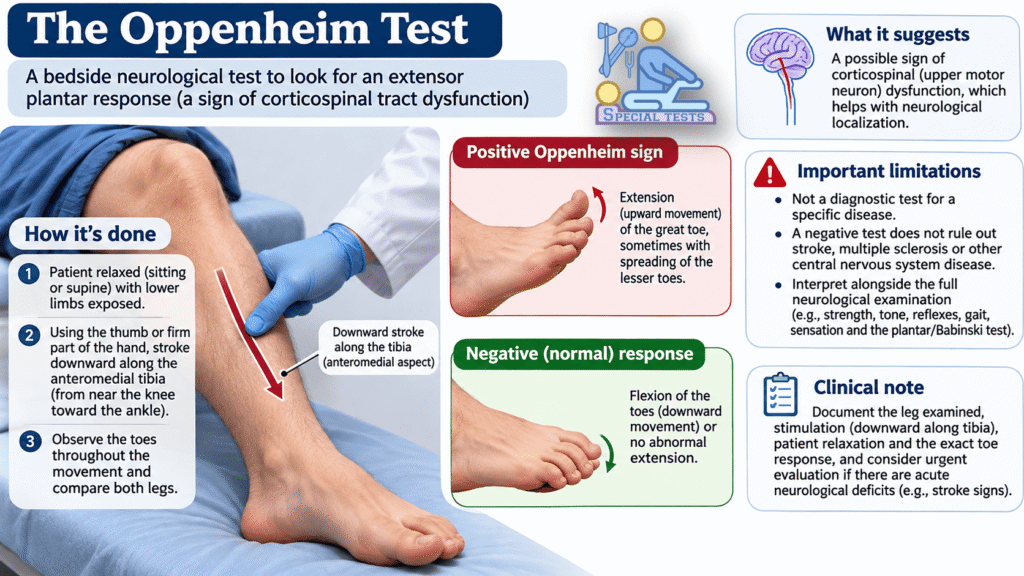
Explain the examination and position the patient comfortably, either sitting or lying supine, with the lower limbs relaxed. Expose the front of the lower leg. Using the thumb or firm part of the examiner’s hand, apply a controlled downward stroke along the anteromedial tibial region from near the knee toward the ankle. Observe the toes throughout the movement rather than looking only after the stroke. Avoid injuring the skin, pressing over an acutely painful area, or repeating the stimulus excessively. Compare both legs and record the actual toe movement, not simply a positive or negative label.
Positive and negative test results
A positive Oppenheim sign is an upward movement, or extension, of the great toe, sometimes accompanied by spreading of the lesser toes. This resembles the extensor response found with a positive Babinski sign. A flexor response, withdrawal of the entire leg from discomfort, or an equivocal toe movement should not be mislabeled as pathological extension. The examiner should distinguish a reproducible great-toe response from generalized guarding. A normal or absent response does not reliably exclude upper motor neuron disease, especially when other clinical findings are concerning.
Interpretation and limitations
The sign is most helpful when interpreted beside strength testing, muscle tone, deep tendon reflexes, gait assessment, sensation and the conventional plantar response. A clearly asymmetric pattern may prompt closer assessment of the corresponding motor pathway, but localization depends on the whole neurological picture. Examiner technique and patient discomfort may alter the response. Evidence describing the Babinski sign and pyramidal lesions is stronger than evidence validating Oppenheim stimulation as an independent diagnostic tool; avoid quoting unsupported sensitivity or specificity figures.
Clinical documentation and next steps
Document the leg examined, direction and site of stimulation, whether the patient was relaxed, and the exact response of the great and lesser toes. Include associated weakness, spasticity, reflex asymmetry or sensory changes. A new extensor plantar response with sudden weakness, facial droop, speech difficulty or another acute neurological deficit requires emergency evaluation for possible stroke. In a stable patient, determine whether neurological referral, imaging or other testing is appropriate from the history and full examination, not from this sign alone.
Frequently asked questions about the Oppenheim Test
Is the Oppenheim test the same as the Babinski test?
Both look for an abnormal extensor toe response, but the stimulus differs: the Oppenheim maneuver is applied along the tibia, while the Babinski maneuver stimulates the sole.
What does a positive Oppenheim sign mean?
It raises concern for corticospinal or upper motor neuron dysfunction when the toe response is genuine and consistent with other neurological findings. It does not establish a specific diagnosis.
Can a negative test rule out stroke or multiple sclerosis?
No. An absent or uncertain response cannot exclude central neurological disease, and acute symptoms must be evaluated on their own merits.