Elbow Valgus Stress Test: Purpose, Technique, Positive Findings, and Accuracy
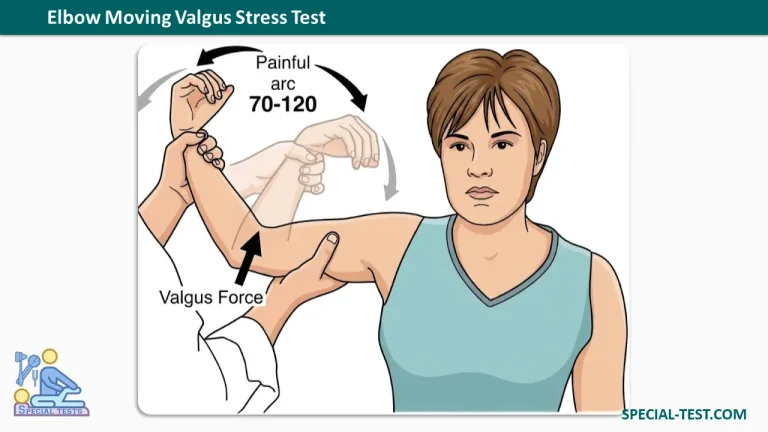
The elbow valgus stress test is a standard orthopedic exam maneuver for checking the stability of the inner (medial) elbow. Clinicians, sports medicine specialists, and physical therapists use it most often when an athlete reports medial elbow pain or instability. This guide covers what the test assesses, how it is performed, how to interpret the result, and how reliable it is.
What Is the Elbow Valgus Stress Test Used For?
The test is used to evaluate the medial ulnar collateral ligament (UCL) of the elbow. The UCL is the main static stabilizer against valgus force, which pushes the forearm outward relative to the upper arm. It is often called the medial collateral ligament (MCL) of the elbow.
Who Is Most at Risk for UCL Injury?
UCL injuries are most common in overhead throwing athletes such as baseball pitchers and javelin throwers. Repeated high-velocity throwing places large valgus loads on the medial elbow, which can gradually stretch or tear the ligament. Acute injuries can also happen after a fall or elbow dislocation.
Common Symptoms That Prompt Testing
- Pain along the inner elbow, especially while throwing
- A feeling of looseness or instability
- Reduced throwing velocity or control
- Tenderness over the medial elbow
How to Perform the Elbow Valgus Stress Test
The test is simple, but good technique matters. Flexing the elbow slightly lets the examiner isolate the ligament instead of the bony restraints.
Step-by-Step Technique
- Position the patient. The patient is seated or supine and relaxed, with the affected arm supported.
- Flex the elbow to 20–30 degrees. This unlocks the olecranon from its fossa, so the bone is not providing stability.
- Externally rotate the humerus. This helps stabilize the upper arm and isolates the elbow.
- Apply valgus stress. Stabilize the arm and gently push the forearm outward to stress the medial side of the joint.
- Compare with the other side. Always test the uninjured elbow for reference, because normal laxity varies between people.
Tips for Accurate Results
Keep the patient relaxed, because muscle guarding can hide true laxity. Apply the force gradually, and note both how much the joint opens and what the patient feels.
What Is a Positive Result?
The test is considered positive if the patient experiences pain, or if excessive laxity is noted compared with the contralateral (opposite) elbow.
Interpreting Pain vs. Laxity
Pain on the medial elbow during the test suggests irritation or injury of the UCL. Increased joint opening, or a soft endpoint with no firm resistance, suggests ligament insufficiency. Both findings can occur together.
Elbow Valgus Stress Test Accuracy
Reported sensitivity for the standard elbow valgus stress test is about 50%. A negative result therefore does not rule out a UCL injury, and many partial tears can be missed.
Why Sensitivity Is Limited
Pain, guarding, and subtle partial tears can all reduce the test’s ability to detect laxity. Because of this, clinicians rarely rely on one test alone.
Related Tests and Imaging
The moving valgus stress test (O’Driscoll et al., indexed on PubMed) was designed to improve diagnostic performance for UCL tears. The milking maneuver is another related test. When the clinical picture is unclear, MRI or MR arthrography is often used to confirm the diagnosis and grade the injury.
When to See a Specialist
See an orthopedic or sports medicine specialist if you have persistent medial elbow pain, a sense of instability, or reduced throwing performance. Early evaluation helps guide treatment, which ranges from rest and structured rehabilitation to surgical reconstruction in selected cases. This article is educational and does not replace a clinical examination.
Frequently Asked Questions (FAQ)
What is the “Elbow Valgus Stress Test” used for?
It is used to assess for a medial ulnar collateral ligament (UCL) injury.
How do you perform the “Elbow Valgus Stress Test”?
Flex the elbow to 20–30 degrees (which unlocks the olecranon), externally rotate the humerus, and apply valgus stress.
What is a positive result?
The test is positive if the patient experiences pain, or if excessive laxity is noted compared with the contralateral side.
How accurate is the test?
Reported sensitivity is about 50%, so a negative result does not exclude a UCL injury.
Can a negative test rule out a UCL tear?
No. Given the limited sensitivity, further testing and imaging may be needed if symptoms persist.
References
- OrthoFixar – Elbow Valgus Stress Test
- O’Driscoll SW, Lawton RL, Smith AM. The “moving valgus stress test” for medial collateral ligament tears of the elbow. Am J Sports Med. 2005;33(2):231–239.