Elbow Plica Impingement Test: Purpose, Technique & Interpretation
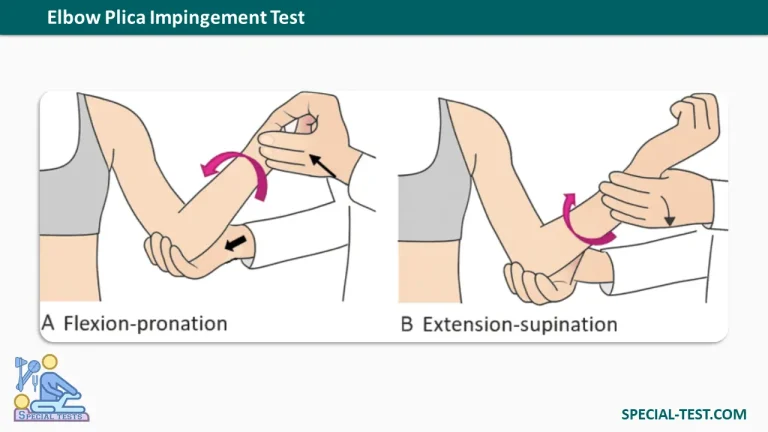
The elbow plica impingement test is a specialized orthopedic physical examination used by clinicians to diagnose synovial plica syndrome in the elbow. Often overlooked as a cause of lateral elbow pain, an inflamed or thickened elbow plica can cause clicking, snapping, and localized discomfort that mimics more common conditions like tennis elbow (lateral epicondylitis).
What is the Elbow Plica Impingement Test Used For?
This physical assessment helps medical professionals identify and differentiate between disorders of the anterior and posterior radiocapitellar plicae (synovial folds within the elbow joint).
Synovial plicae are normal embryonic remnants of the joint capsule. However, repetitive microtrauma, overuse, or direct injury can cause them to become thickened, fibrotic, and irritated, leading to mechanical symptoms such as catching, locking, snapping, and pain during arm movement.
How to Perform the Elbow Plica Impingement Tests
The examination techniques differ depending on whether the clinician is testing the anterior or posterior radiocapitellar plica:
1. Anterior Radiocapitellar Plica Test (Flexion-Pronation Test)
- Patient Position: Seated or lying comfortably with the arm relaxed.
- Examiner Action: The examiner applies a valgus load to the elbow while passively flexing the elbow joint with the forearm held in pronation.
- Positive Indication: Pain or a distinct snapping sensation (which is clinically more significant than pain alone) occurring between 90° and 110° of flexion indicates a positive test for an anterior radiocapitellar plica.
2. Posterior Radiocapitellar Plica Test (Extension-Supination Test)
- Patient Position: Seated or lying comfortably with the arm relaxed.
- Examiner Action: The examiner applies a valgus load to the elbow while passively extending the elbow joint with the forearm held in supination.
- Positive Indication: Pain or a snap during this maneuver points toward a posterior radiocapitellar plica issue or radiocapitellar chondromalacia.
Clinical Interpretation & Key Takeaways
- The Significance of Snapping: While pain can arise from multiple structures around the lateral elbow, a mechanical snap or click during the specific arc of motion is the hallmark indicator of a true plica pathology.
- Pain-Only Limitation: If the patient experiences only pain without a accompanying mechanical snap or catch, a plica syndrome is considered unlikely, and alternative diagnoses (such as lateral epicondylitis or radial tunnel syndrome) should be investigated.