Wrist Range of Motion
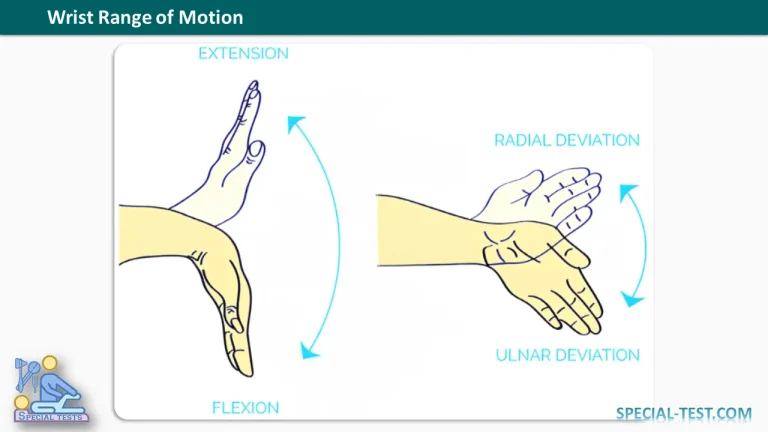
Assessing wrist function is a vital component of orthopedic and physical therapy examinations. Whether you are evaluating an athlete recovering from a traumatic fall, a desk worker with repetitive strain symptoms, or a patient post-immobilization, accurately measuring wrist range of motion (ROM) and executing targeted special tests is key to a precise diagnosis.
Normal Wrist Range of Motion Benchmarks
Quantifying active range of motion (AROM) and passive range of motion (PROM) helps establish a baseline, monitor treatment progress, and identify asymmetries. Standard benchmarks include:
- Wrist Flexion: 0° to 80°–90° (bending the palm toward the forearm)
- Wrist Extension (Dorsiflexion): 0° to 70°–90° (moving the back of the hand backward)
- Radial Deviation: 0° to 15°–20° (tilting the wrist toward the thumb)
- Ulnar Deviation: 0° to 30°–45° (tilting the wrist toward the pinky)
Clinical Takeaways for SEO and Practice
- Always Compare Bilaterally: Check the uninjured side first to establish the patient’s baseline normal ROM.
- Differentiate AROM vs. PROM: Active limitations usually point to muscle weakness or pain, whereas passive limitations suggest joint capsule tightness or structural blockage.
- Document Context: Record patient positioning, instrument usage (goniometer vs. digital inclinometer), and concurrent pain scales for consistent tracking.