Prone Instability Test
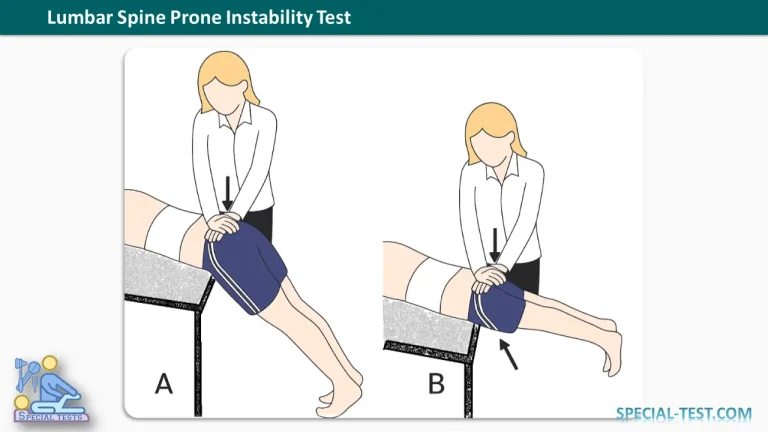
What is the "Prone Instability Test" used for?
- Lumbar spine instability in patients presenting with chronic low back pain.
- This test helps identify whether segmental instability of the lumbar vertebrae is contributing to the patient’s symptoms.
How to perform the "Prone Instability Test"?
- The patient lies prone on the examination table, the upper body (torso and hips) rests comfortably on the table and the legs hang freely over the edge, with the feet resting on the floor.
- The examiner applies gentle pressure over the posterior aspect of the lumbar spine (spinous processes) while the patient’s legs remain relaxed on the floor. The patient reports any pain or discomfort felt during this pressure.
- Next, the patient lifts both legs off the floor, activating the lumbar extensor muscles.
- The examiner again applies pressure to the same lumbar area.
- The response is compared between the relaxed and active muscle conditions.
What is the positive result?
- The test is positive when pain is present only in the resting position (when the legs are supported on the floor) and subsides when the legs are lifted. This indicates segmental lumbar instability, as the active contraction of spinal muscles temporarily stabilizes the vertebral segments and reduces pain.
A positive Prone Instability Test is a strong indicator of lumbar segmental instability, often seen in patients with:
- Chronic mechanical low back pain
- Poor lumbar muscular control
- History of repeated lumbar strain
- Postural or degenerative changes