Published August 25, 2026Read time 1 min readReaders 18
What is the "Sacroiliac Rocking Test" used for?
Assess the integrity and pain response of the sacroiliac (SI) joint and the sacrotuberous ligament.
It helps identify dysfunction or irritation within these structures.
How to perform the "Sacroiliac Rocking Test"?
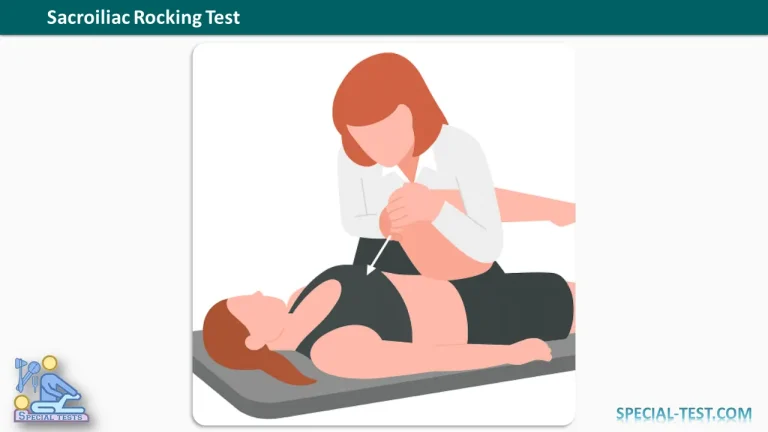
The patient lies in a supine position on the examination table.
The examiner flexes the patient’s hip and knee fully.
The hip is then adducted toward the midline.
To perform the maneuver correctly, the knee is moved toward the patient’s opposite shoulder, creating a “rocking” motion at the sacroiliac joint.
Both the hip and knee should have full range of motion and be free from pathology before performing the test.
Some authors recommend adding medial rotation of the hip during flexion and adduction to further increase stress on the SI joint.
During the test, the examiner may palpate the sacrotuberous ligament (located between the sacrum and the ischial tuberosity) to check for tenderness or abnormal tension.
What is the positive result?
Pain reproduced in the sacroiliac joint region indicates a positive test and suggests sacroiliac joint dysfunction or ligamentous irritation.
The test can also produce tenderness along the sacrotuberous ligament if it is inflamed or stressed.