Published July 21, 2026Read time 2 min readReaders 15
What is the "Prone Knee Flexion Test" used for?
Prone Knee Flexion Test for Lumbar Spine is used to differentiates between lumbar and sacroiliac pain.
How to perform the "Prone Knee Flexion Test"?
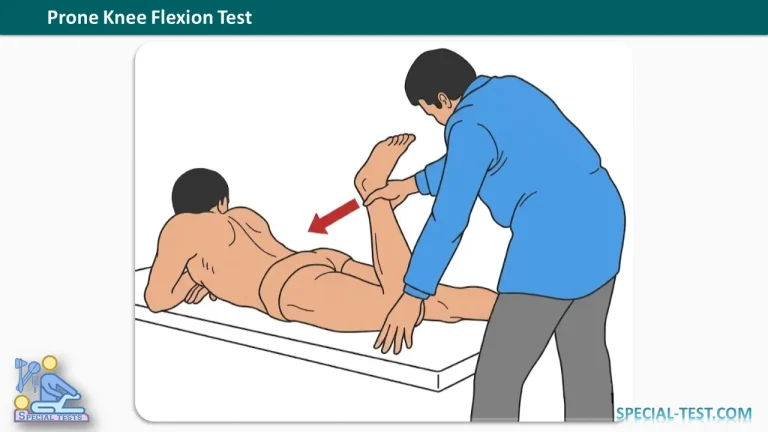
Place the patient in prone position.
The examiner bends the patient’s knee and tries to bring the heel as far as possible toward the buttocks.
First the patient should passively give way, but then try to extend the leg against the resistance of the examiner’s hand.
What is the positive result?
Prone Knee Flexion Test for Lumbar Spine is considered positive when there is a feeling of tension first in the sacroiliac joint, then in the lumbosacral junction, and lastly in the lumbar spine.
This test should be performed when there is suspicion of changes in the pelvic ligaments and intervertebral disks.
Pain in the sacroiliac joint or in the lumbosacral or lumbar areas without radicular, radiating pain suggests degenerative changes and/or ligament insufficiency.
Increase in radicular pain indicates intervertebral disk injury.
Unilateral nerve root pain in the lumbar spine, in the buttock region, and over the posterior thigh suggest L2/L3 nerve root injury.
During this test the femoral nerve will also be stretched. The occurrence of pain and/or paresthesia in the anterior thigh indicates tight quadriceps, quadriceps lesion, or femoral nerve irritation.
References
Clinical Tests for the Musculoskeletal 3rd Ed. Book