Pheasant Test
What is the "Pheasant Test" used for?
- Also known as the Prone Instability Test,
- Assess lumbar spinal segmental instability or nerve root irritation resulting from hyperextension of the lower spine.
How to perform the "Pheasant Test"?
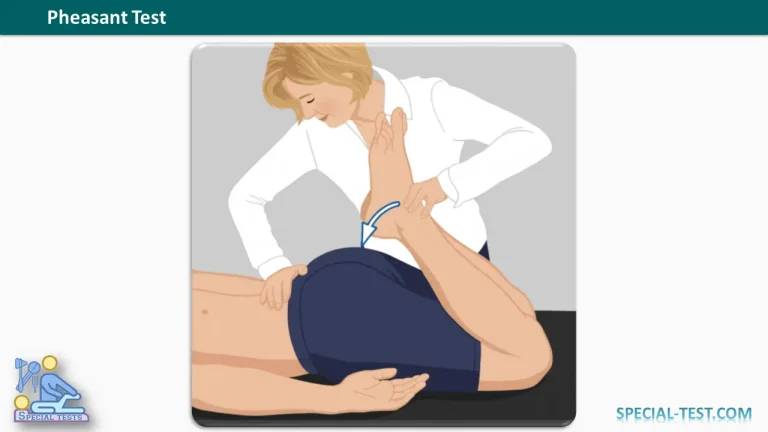
- The patient lies prone (face down) on the examination table in a relaxed position.
- With one hand, the examiner applies gentle but firm pressure to the posterior aspect of the lumbar spine, providing anterior stabilization to the vertebral segments.
- With the other hand, the examiner passively flexes both of the patient’s knees, bringing the heels progressively toward the buttocks until they make contact.
What is the positive result?
If this maneuver reproduces pain or radiating symptoms in one or both legs, the test is considered positive. A positive Pheasant Test result suggests:
- Lumbar segmental instability,
- Irritation/compression of the nerve roots, often due to conditions such as spondylolisthesis, facet joint irritation, or disc pathology.