Pelvic ligaments Tests
What is the “Pelvic ligaments Tests” used for?
- Pelvic ligaments Tests are set of tests that is used to functional assessment of the pelvic ligaments: iliolumbar ligament, sacrospinous ligament, sacroiliac ligament and sacrotuberous ligament.
How to perform the “Pelvic ligaments Tests”?
- The patient is prone.
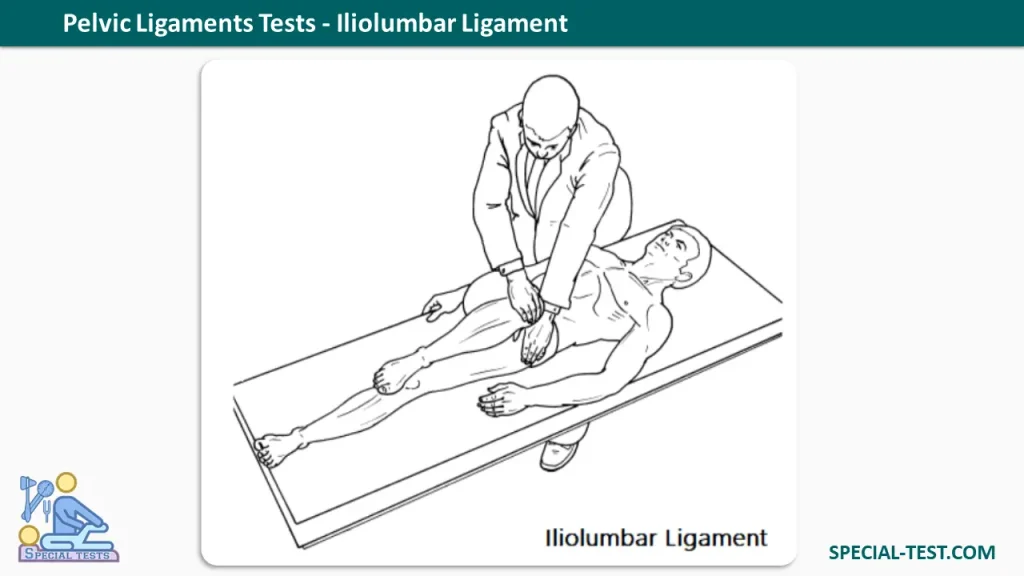
- To evaluate the iliolumbar ligament, the patient’s knee and hip are flexed and the examiner then adducts the leg to the contralateral hip. While executing this maneuver, the examiner presses on the knee to exert axial pressure on the femur.
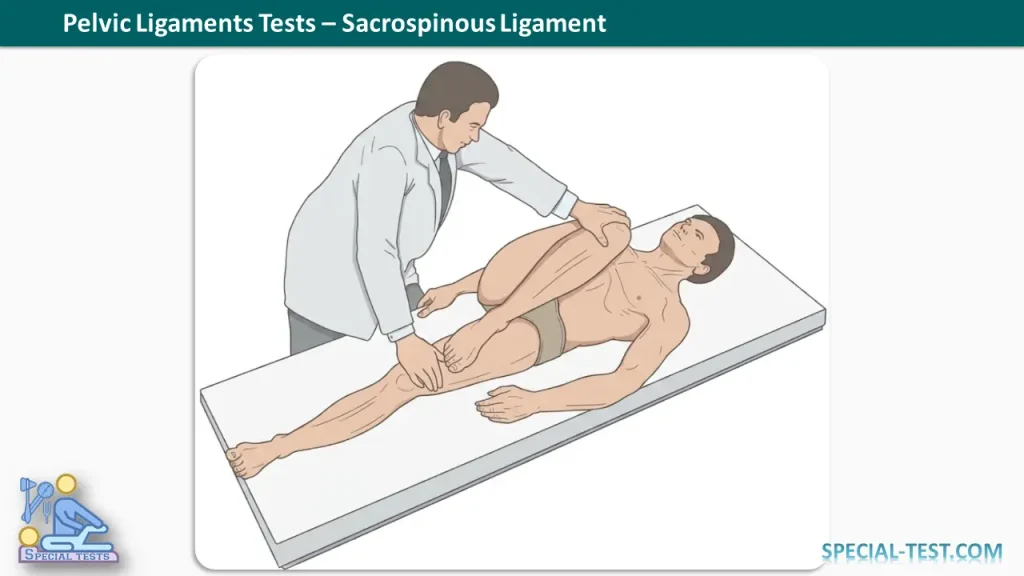
- To evaluate the sacrospinous and sacroiliac ligaments, the patient’s knee and hip are maximally flexed and the examiner adducts the leg toward the contralateral shoulder. While executing this maneuver, the examiner presses on the knee to exert axial pressure on the femur.
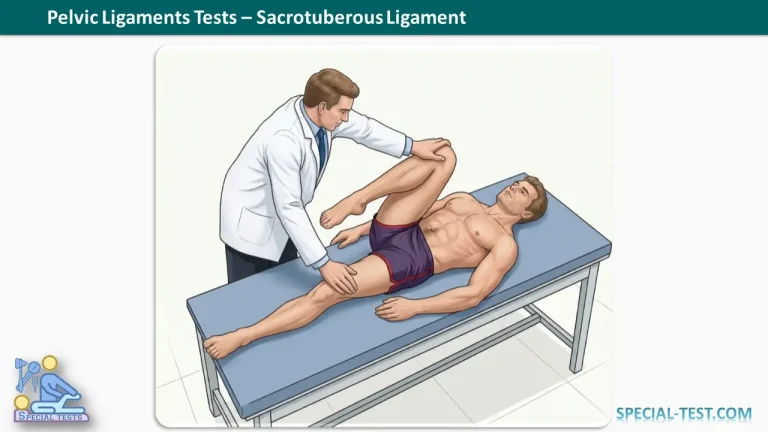
- To evaluate the sacrotuberous ligament, the patient’s knee and hip are maximally flexed and the examiner moves the leg toward the ipsilateral shoulder.
What is the positive result?
Stretching pain occurring within a few seconds suggests functional shortening and excessive stresses on the ligaments, although it can also occur in a hypermobile or motion-restricted sacroiliac joint.
Pelvic ligaments Tests is considered positive in these situations:
- Pain caused by stretching the iliolumbar ligament is referred to the inguinal region (the differential diagnosis includes a hip disorder).
- Pain caused by stretching the sacrospinous and sacroiliac ligaments is felt within the S1 dermatome from a point posterolateral to the hip as far as the knee.
- Sacrotuberous ligament pain radiates into the posterior aspect of the thigh.
References
- Clinical Tests for the Musculoskeletal 3rd Ed. Book