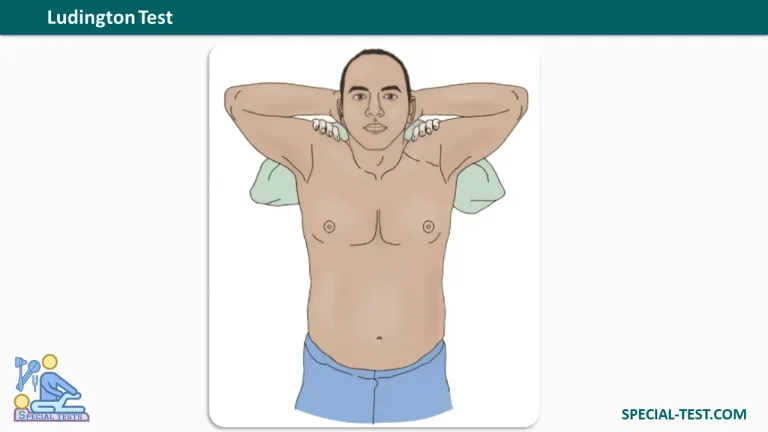
Ludington Test
What is the "Ludington Test" used for?
- Long head of biceps pathology
How to perform the "Ludington Test"?
- The patient holds the arm abducted in neutral rotation with the elbow flexed 90°.
- The examiner immobilizes the patient’s elbow with one hand and places the heel of the other hand on the patient’s distal forearm .
- The patient is then asked to externally rotate his or her arm against the resistance of the examiner’s hand.
What is the positive result?
- Pain in the bicipital groove or at the insertion of the biceps suggests a tendon disorder.
- Pain in the anterolateral aspect of the shoulder is often a sign of a disorder of the rotator cuff , especially the infraspinatus tendon.
References