Published August 31, 2026Read time 1 min readReaders 40
What is the "Kendall Test" used for?
Called Rectus Femoris Contracture Test
Assess shortening or contracture of the rectus femoris muscle
How to perform the "Kendall Test"?
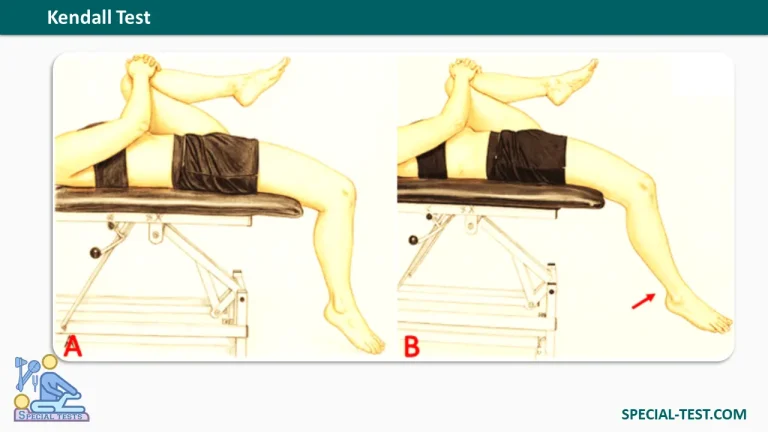
The patient lies supine on the examining table with the knees hanging over the edge. This position allows the knee to move freely into flexion or extension during the test.
Ask the patient to flex one knee toward the chest and hold it firmly.
Observe the opposite leg, which becomes the test limb.
Evaluate the angle of the test knee:
A normal response is for the test knee to remain at 90° of flexion when the opposite hip is fully flexed.
If the knee begins to extend slightly, this suggests a rectus femoris contracture.
The examiner may passively flex the test knee to confirm whether it naturally returns to 90°.
Always palpate the rectus femoris during the maneuver to detect true muscle tightness.
What is the positive result?
The Kendall Test is positive when the tested knee extends instead of holding at 90° suggesting tightness or contracture of the rectus femoris.