Heel Thump Test
What is the "Heel Thump Test" used for?
- To determine if there is a tibial stress fracture.
- The heel-thump special test is a useful screening tool for evaluating ankle injuries and for differentiating syndesmotic sprains from lateral ankle sprains.
How to perform the "Heel Thump Test"?
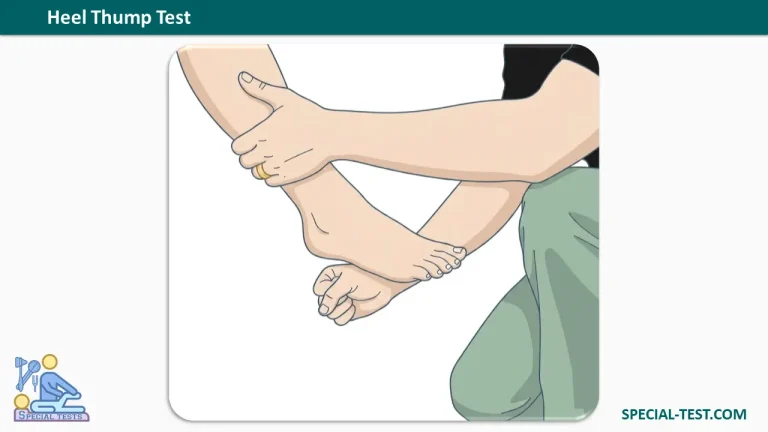
- The patient is in seated or supine
- The examiner uses left hand to stabilize the leg
- With the right hand, the examiner applies a firm thump on the heel with the fist so that the force is applied to the center of the heel and in line with the long axis of the tibia.
What is the positive result?
- A positive test (pain) in the area of the ankle indicates a syndesmosis injury.
- Pain along the shaft of the tibia may indicate a stress fracture of the tibia.
References
- Mulligan, Edward. (2011). Evaluation and management of ankle syndesmosis injuries. Physical therapy in sport : official journal of the Association of Chartered Physiotherapists in Sports Medicine. 12. 57-69. 10.1016/j.ptsp.2011.03.001. Link
- Clinical Tests for the Musculoskeletal System 3rd Edition.
- Dutton’s Orthopaedic Examination, Evaluation, And Intervention 3rd Edition.