Femoral Shear Test
Published September 2, 2026
Read time 1 min read
Readers 18
What is the "Femoral Shear Test" used for?
- Assess the integrity and pain provocation of the sacroiliac (SI) joint.
- It helps to detect dysfunction or irritation within the SI joint complex.
How to perform the "Femoral Shear Test"?
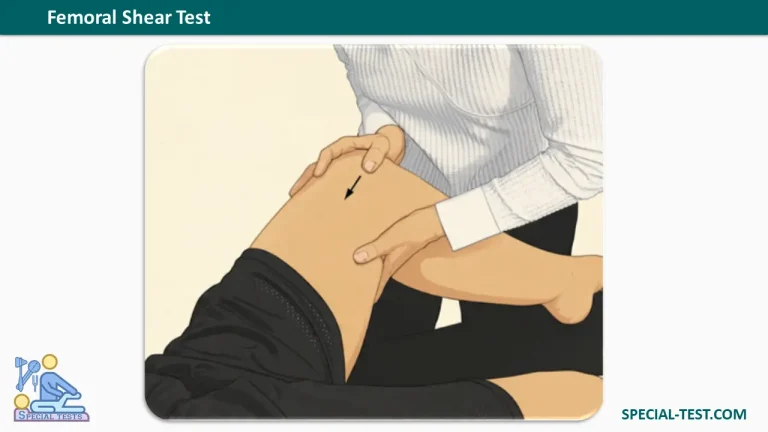
- The patient lies in the supine position (on their back) on the examination table.
- The examiner stands beside the patient.
- The patient’s hip and thigh are slightly flexed, abducted, and laterally rotated—approximately 45° from the midline.
- The examiner supports the patient’s knee and applies a gradual downward (posteriorly directed) force through the long axis of the femur.
- This maneuver produces an anterior-to-posterior shear stress on the sacroiliac joint on the same side.
What is the positive result?
- The test is considered positive if the patient reports pain localized over the sacroiliac joint during the maneuver.
- A positive result indicates SI joint dysfunction, inflammation, or irritation.