Polk Test for Elbow Pain: Purpose and How to Perform It
What Is the Polk Test Used For?
The Polk Test is a simple clinical exam that helps tell lateral epicondylitis (tennis elbow) apart from medial epicondylitis (golfer’s elbow). By showing which side of the elbow hurts during specific movements, it helps clinicians pinpoint the source of elbow pain and guide the next steps in diagnosis and treatment.
How to Perform the Polk Test: Step by Step
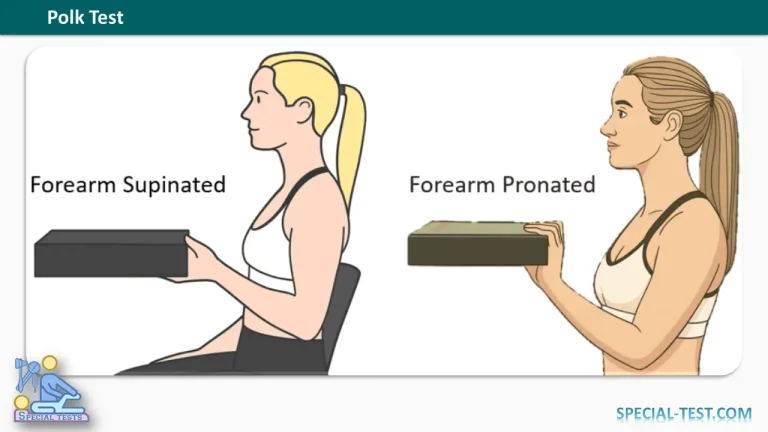
What you need: A 2.5 kg (5.5 lb) weight and a chair.
Starting position: The patient sits with the elbow bent (flexed).
Part 1: Pronated forearm (testing for lateral epicondylitis)
- Ask the patient to hold the weight with the forearm pronated (palm facing down).
- Have the patient lift the weight by flexing the elbow.
- Positive result: Pain at the lateral epicondyle (outer elbow) suggests lateral epicondylitis, or tennis elbow.
Part 2: Supinated forearm (testing for medial epicondylitis)
- Ask the patient to repeat the lift with the forearm supinated (palm facing up).
- Positive result: Pain at the medial epicondyle (inner elbow) suggests medial epicondylitis, or golfer’s elbow.
Polk Test Results at a Glance
| Forearm Position | Pain Location | Suggested Diagnosis |
|---|---|---|
| Pronated (palm down) | Lateral epicondyle | Lateral epicondylitis (tennis elbow) |
| Supinated (palm up) | Medial epicondyle | Medial epicondylitis (golfer’s elbow) |