Active Radiocapitellar Compression Test: Purpose, Technique, and Interpretation
What Is the Active Radiocapitellar Compression Test Used For?
The Active Radiocapitellar Compression Test is a clinical elbow examination used to help identify osteochondritis dissecans (OCD) of the capitellum, a condition in which the cartilage and underlying bone of the outer part of the elbow joint are damaged. It is most often seen in young, overhead, or weight-bearing athletes such as gymnasts and throwers.
How to Perform the Active Radiocapitellar Compression Test
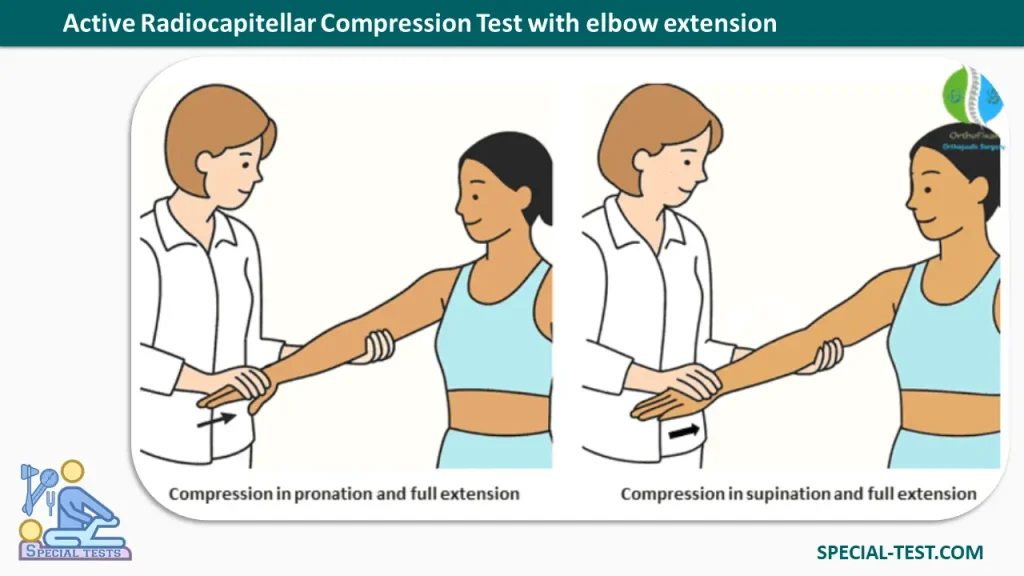
- Position the elbow. With the elbow in full extension, the examiner applies an axial (compression) load through the forearm, pressing the radial head into the capitellum.
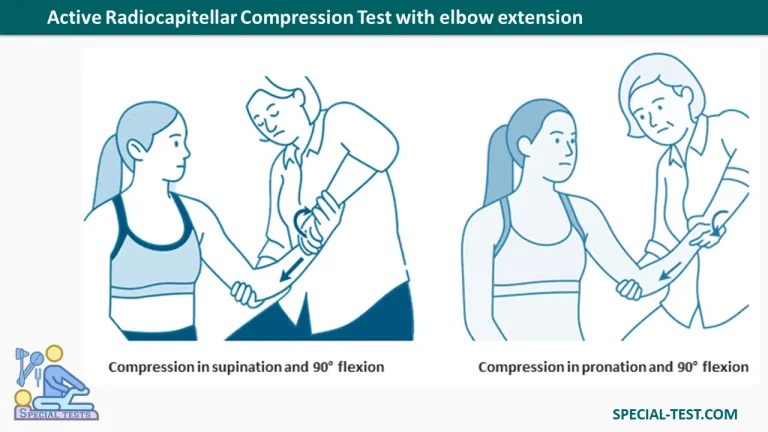
- Consider 90° flexion. Some clinicians advocate performing the compression with the elbow flexed to 90°. In this position the radiocapitellar joint is in its closed-pack position, which produces greater joint compression.
- Add active forearm rotation. While the compression is maintained, the patient actively supinates and pronates the forearm.
What Is a Positive Result?
Pain in the lateral compartment of the elbow during compression and forearm rotation is a positive test. A positive result may indicate osteochondritis dissecans of the capitellum, and further assessment, such as imaging (X-ray or MRI), is usually warranted to confirm the diagnosis.