Clunk Test
What is the “Clunk Test” used for?
- Superior anterior and posterior glenoid labral tear
- sometimes anterior shoulder instability.
How to perform the “Clunk Test”?
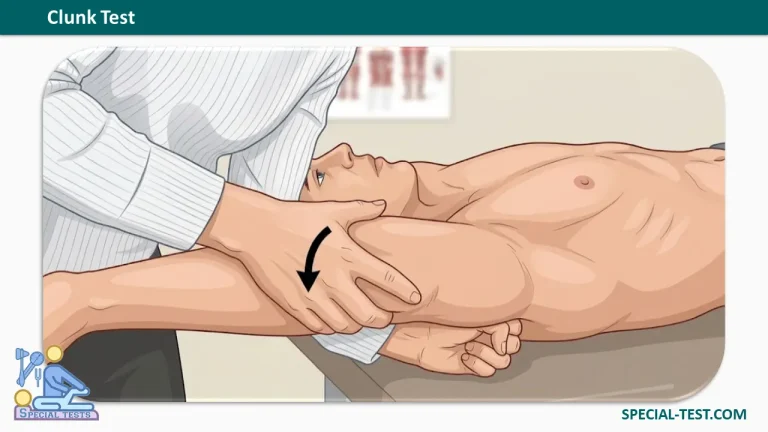
- The patient lies supine.
- The examiner places one hand on the posterior aspect of the shoulder over the humeral head.
- The examiner’s other hand holds the humerus above the elbow.
- The examiner fully abducts the arm over the patient’s head.
- The examiner then pushes anteriorly with the hand over the humeral head (a fist may be used to apply more anterior pressure) while the other hand rotates the humerus into lateral rotation.
- The examiner may modify the test by varying the degrees of abduction, essentially “circling the shoulder.” This variation allows for the evaluation of different segments of the labrum, providing a more complete diagnostic picture.
What is the positive result?
- The most definitive indication is an audible or palpable clunk or grinding sensation during the maneuver. This sound or sensation typically indicates a tear in the labrum.
- Additionally, the test may elicit apprehension in patients with anterior instability.
References
- Clunk Test – Orthofixar
- Clunk Test – Physiopedia
- Andrews JR, Gillogly S. Physical examination of theshoulder in throwing athletes. In: Zarins B, AndrewsJR, Carson WG, eds. Injuries to the Throwing Arm.Philadelphia: WB Saunders; 1985.