Babinski Test
Used For
- Integrity of the corticospinal tract
How to Perform
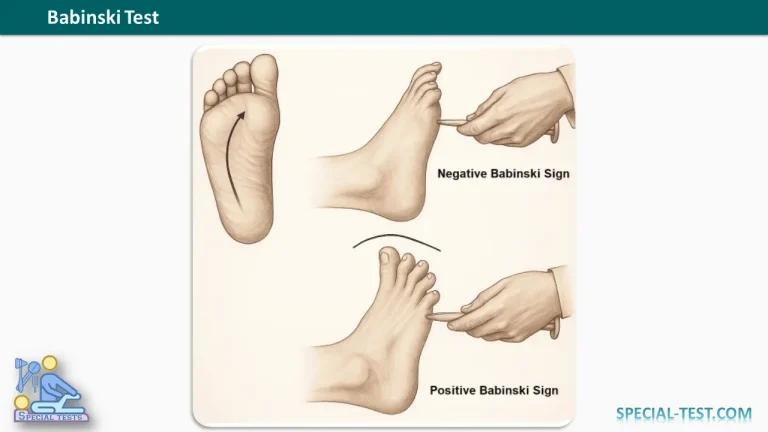
- The examiner uses a pointed object (such as the handle of a reflex hammer or a wooden stick) and runs it along the plantar aspect (sole) of the patient’s foot.
- The stroke typically begins at the heel and moves forward along the lateral border (outside edge) of the foot, then curves medially across the ball of the foot.
- The patient should be relaxed, and the movement should be firm but not painful.
Result
In healthy adults, the normal response is plantar flexion of the foot, with the toes curling downward (flexing). The sole of the foot turns inward indicating normal upper motor neuron function and a healthy corticospinal tract.
A positive Babinski test (Abnormal) is characterized by: Extension of the big toe (dorsiflexion) Abduction (splaying) of the other toes. This suggests dysfunction of the upper motor neuron pathway.
Bilateral Positive Babinski Sign: Suggests an upper motor neuron lesion.
Unilateral Positive Babinski Sign: May indicate either an upper motor neuron lesion on that side, or possibly a lower motor neuron lesion.