Morton’s Neuroma Test: How to Perform, Positive Results, and Clinical Purpose
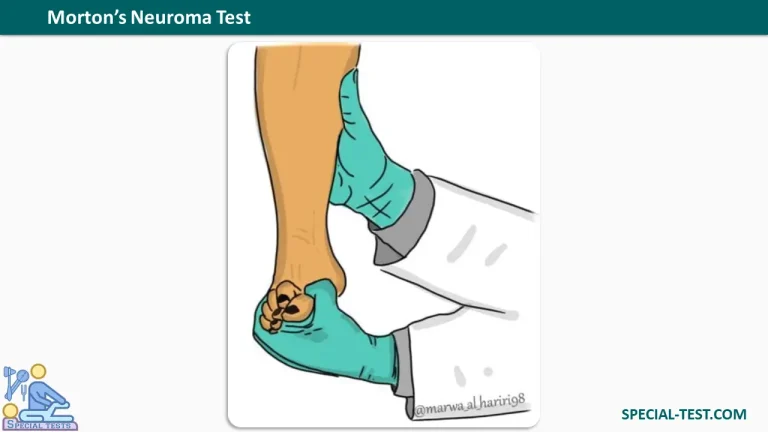
What is the Morton’s Neuroma Test?
The Morton’s Neuroma Test (often referred to as the Mulder’s test or squeeze test) is a targeted clinical orthopedic examination used by healthcare professionals to detect the presence of a Morton’s neuroma. This condition involves a painful thickening of the tissue surrounding one of the nerves leading to the toes—most commonly between the third and fourth metatarsal heads.
How to Perform the Test
- Patient Positioning: The patient should be comfortably seated or lying in a supine position.
- Applying Pressure: The examiner grasps the forefoot and compresses the foot laterally, applying firm pressure simultaneously to the medial and lateral aspects of the foot at the metatarsophalangeal joints.
Understanding the Results
Positive Test Result
- Primary Indicator: A sharp, localized pain or reproduction of the patient’s familiar symptoms at the precise location of the neuroma (often accompanied by an audible or palpable click, known as Mulder’s click).
- Associated Symptoms: Pain is typically worsened by weight-bearing activity, tight shoes, or high heels, and relieved by rest or removing footwear.
References
- Clinical Tests for the Musculoskeletal System, 3rd Edition.
- Dutton’s Orthopaedic Examination, Evaluation, And Intervention, 3rd Edition.