What is the Jack Test? Purpose, Technique, and Clinical Significance
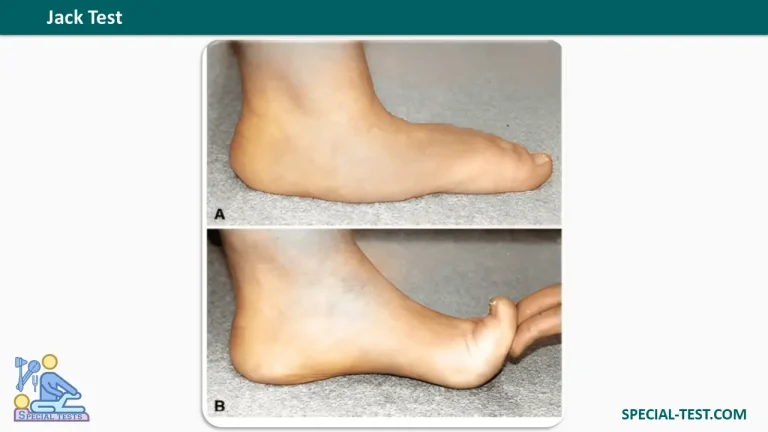
When evaluating pediatric or adult foot posture, clinicians rely on specific physical examinations to differentiate between flexible and rigid flatfeet. One of the most reliable and straightforward clinical evaluations is the Jack Test (also known as the Jack’s test or great toe dorsiflexion test).
What is the Jack Test Used For?
The Jack Test is a clinical orthopedic examination used to demonstrate hindfoot and subtalar joint flexibility in patients with a flexible flatfoot (pes planus).
It is rooted in the biomechanical principle of the “windlass mechanism” of the plantar fascia. When the foot functions normally, tightening or pulling the plantar fascia alters the structural alignment of the foot bones to create stability.
How to Perform the Jack Test
Performing the Jack Test is quick and non-invasive. Follow these step-by-step instructions:
- Patient Position: The patient stands weight-bearing (or sits with the foot unloaded, depending on the clinical context) to observe the natural shape of the foot.
- Action: The examiner maximally dorsiflexes the patient’s hallux (big toe) while keeping the rest of the foot relaxed on the ground.
- Observation: The examiner looks for the spontaneous appearance or elevation of the medial longitudinal arch.
The Biomechanics Behind It
Dorsiflexion of the big toe pulls the plantar fascia distally under the anatomical pulley of the first metatarsal head.
The big toe can only achieve full dorsiflexion if the calcaneus (heel bone) is pulled distally toward the metatarsal heads. This coordinated movement:
- Shortens the overall length of the foot.
- Elevates the medial longitudinal arch.
- Automatically inverts the subtalar joint.
A positive Jack Test confirms that a flatfoot is flexible and capable of forming an arch under tension, which heavily influences conservative treatment plans like orthotics or stretching.
References
- Orthofixar – Jack Test Foot Flexibility
- Mosca, Vincent. (2010). Flexible flatfoot in children and adolescents. Journal of Children’s Orthopaedics, 4, 107–121. DOI: 10.1007/s11832-010-0239-9