Phelps Test
What is the "Phelps Test" used for?
- Assess contracture of the gracilis muscle
- Differentiate whether limited hip abduction is caused by muscular tightness rather than joint pathology
How to perform the "Phelps Test"?
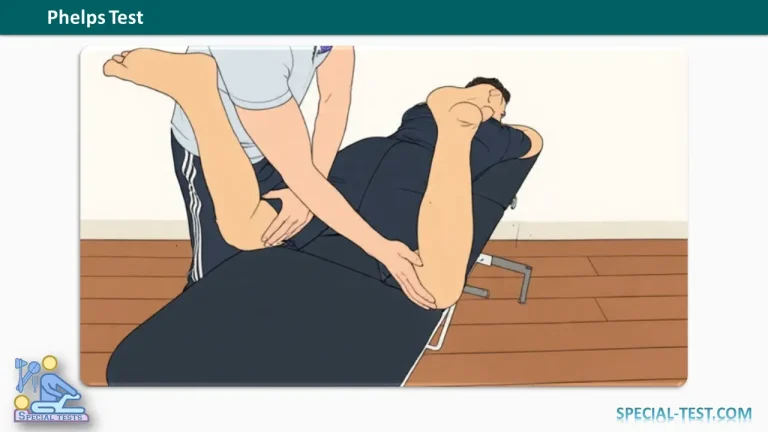
- The patient lies prone on the examination table. The knees remain fully extended.
- The examiner first passively abducts both legs as far as possible while the knees are extended.
- Next, the examiner flexes both knees to 90°.
- With the knees flexed, the examiner again attempts to abduct the hips further.
What is the positive result?
- Positive Phelps’ Test: If hip abduction increases after the knees are flexed to 90°, the test is positive. This indicates a contracture of the gracilis muscle, as flexing the knees relaxes the gracilis and allows greater abduction.
- Negative Test: If hip abduction does not improve, the limitation is likely due to other structures—possibly the adductor longus, adductor brevis, joint pathology, or capsular tightness.