Milgram Test
What is the "Milgram Test" used for?
- Assess for lumbar spine pathology, particularly space-occupying lesions such as herniated discs, intrathecal pressure increases, or other causes of nerve root compression.
How to perform the "Milgram Test"?
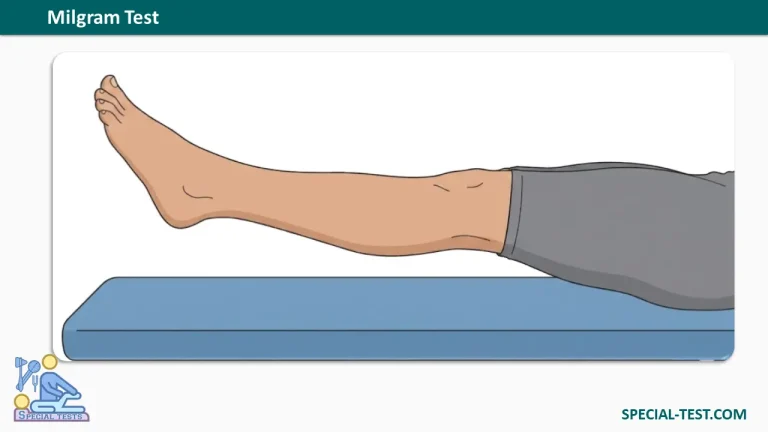
- The patient lies supine on the examination table.
- The patient is instructed to raise both legs simultaneously approximately 5–10 cm (2–4 inches) off the table.
- The legs should be kept straight (knees extended).
- The patient attempts to hold this position for 30 seconds.
What is the positive result?
The test is considered positive if:
- The patient is unable to maintain the leg position for 30 seconds, or
- The maneuver reproduces pain, tingling, or other symptoms in one or both lower limbs.
A positive result may indicate pressure on nerve roots due to intervertebral disc protrusion or space-occupying lesions within the spinal canal that compromise the cauda equina or lumbosacral nerve roots.