Sitting Root Test
What is the "Sitting Root Test" used for?
- Sciatic nerve irritation or lumbar nerve root tension due to lumbar disc herniation or nerve root compression
How to perform the "Sitting Root Test"?
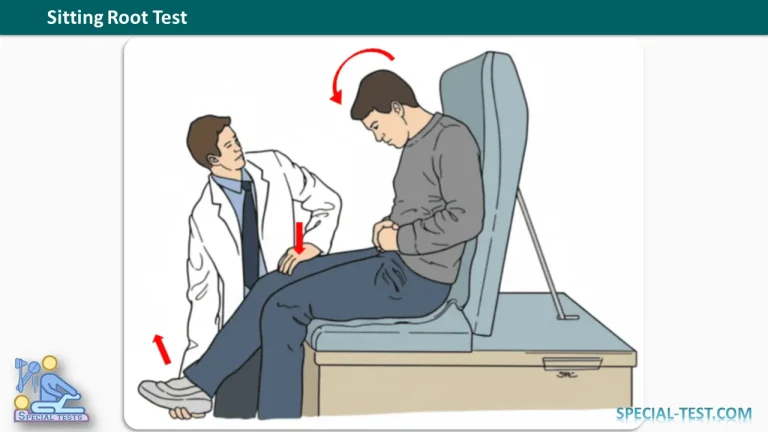
- The patient sits at the edge of the examination table with the hips flexed to 90° and feet hanging freely (not touching the floor), hands resting on the thighs or examination table, and the neck flexed forward with the chin touching or approaching the chest.
- This posture increases tension on the dural and neural structures of the spine.
- The examiner places one hand on the distal thigh of the leg being tested to prevent additional hip flexion, with the other hand, the examiner extends the patient’s knee to straighten the leg.
- The test may be performed actively (patient extends the knee) or passively (clinician extends the knee).
What is the positive result?
- Reproduction of pain, numbness, or tingling radiating along the posterior thigh, buttock, or calf, similar to the symptoms provoked during the Straight Leg Raise test. This indicates neural tension or sciatic nerve irritation.