Scratch Collapse Test
What is the "Scratch Collapse Test" used for?
- Nerve compression syndromes
- Carpal tunnel syndrome represents perhaps the most common application, where the median nerve is assessed at the wrist.
How to perform the "Scratch Collapse Test"?
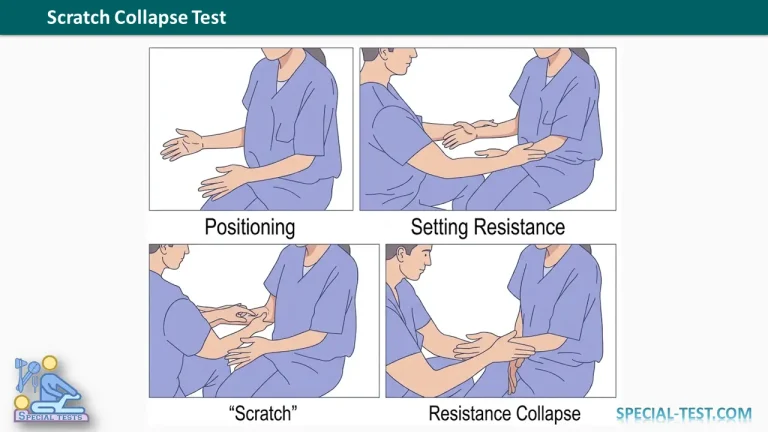
- During the examination, the patient sits with their arms flexed at the elbows and their wrists in neutral position, while actively resisting internal rotation pressure applied by the examiner.
- The clinician then lightly scratches or strokes the skin over the suspected area of nerve compression.
What is the positive result?
- A positive test is indicated by a momentary loss of resistance to external rotation pressure immediately following stimulation of the compressed nerve segment.
Test Accuracy
- A 2014 study by Makanji and colleagues reported that the Scratch Collapse Test exhibited 82% sensitivity and 73% specificity for carpal tunnel syndrome, comparing favorably with traditional tests.
- For cubital tunnel syndrome, some studies have suggested even higher sensitivity values approaching 89%, though specificity tends to be somewhat lower.