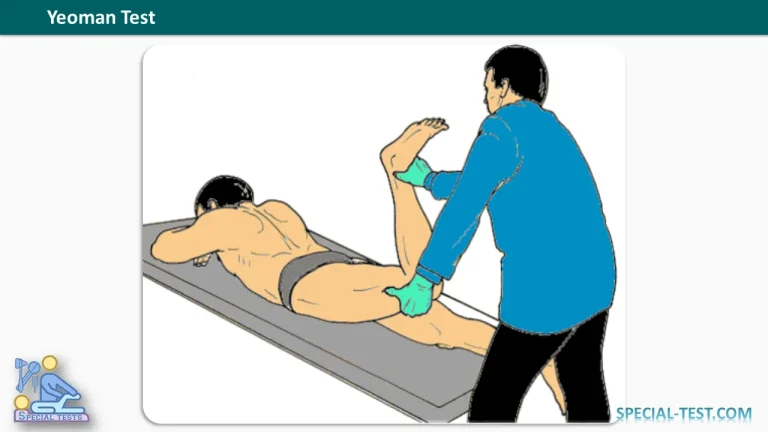
Yeoman Test
What is the "Yeoman Test" used for?
- Yeoman Test is used to assess sacroiliac joint pain.
How to perform the "Yeoman Test"?
- The patient is prone with the knee flexed 90°.
- The examiner raises the flexed leg on the examining table, hyperextending the hip.
What is the positive result?
- The first part of this test initially places stress on the posterior structures of the sacroiliac joint; later the stress shifts to the anterior portions, primarily affecting the anterior sacroiliac ligaments.
- Pain in the lumbar spine suggests the presence of pathologic processes at that site.
- Anterior thigh paresthesia may indicate a femoral nerve stretch.
Test Accuracy
- Sensitivity: 93 %
- Specificity: 89 %
References
- Clinical Tests for the Musculoskeletal 3rd Ed. Book