Homans Sign Test: Purpose, Procedure, and Interpretation for DVT
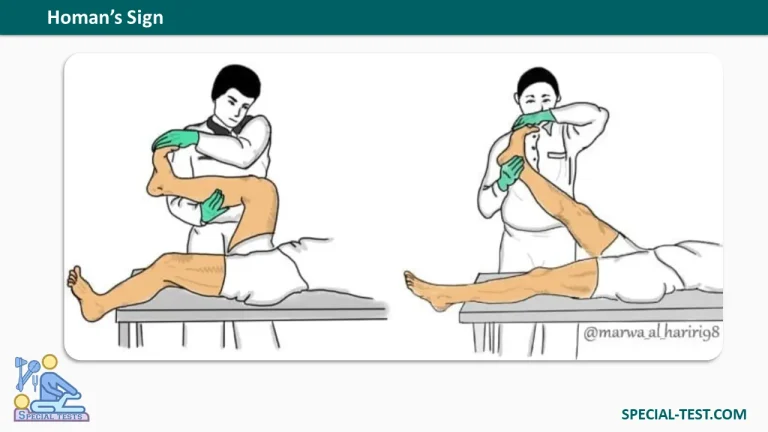
What is the Homans Sign?
The Homans Sign is a classic physical examination test historically used to help assess for suspected Deep Vein Thrombosis (DVT), also known as deep vein thrombophlebitis.
While it remains a recognizable term in clinical education, modern medical guidelines note that the Homans sign has low sensitivity and specificity. Consequently, it should not be used in isolation to diagnose or rule out a DVT.
How to Perform the Homans Sign Test
Healthcare providers typically perform the maneuver using the following steps:
- Position the Patient: Have the patient lie supine (flat on their back) with their leg relaxed and the knee fully extended.
- Perform Passive Dorsiflexion: Support the leg and gently, passively dorsiflex the patient’s foot (pushing the toes upward toward the shin).
- Compare with Knee Flexed: Repeat the maneuver with the patient’s knee flexed to differentiate calf pain caused by venous pathology from other musculoskeletal issues like a tight gastrocnemius muscle.
What is a Positive Homans Sign Result?
A test is traditionally considered positive if the patient experiences:
- Deep calf pain or discomfort during passive dorsiflexion of the foot.
- Localized tenderness upon palpation of the deep calf muscles.
- Associated clinical indicators such as leg swelling, warmth, and pallor, or a diminished/absent dorsalis pedis pulse.
Clinical Note: Because acute DVT is a serious medical condition that can lead to a pulmonary embolism, a suspected DVT requires immediate objective diagnostic imaging (such as a lower-extremity venous duplex ultrasound) rather than relying solely on physical exam signs.
References
- Clinical Tests for the Musculoskeletal System, 3rd Edition.
- Dutton’s Orthopaedic Examination, Evaluation, And Intervention, 3rd Edition.