The Heel Thump Test: Purpose, Technique, and Interpretation
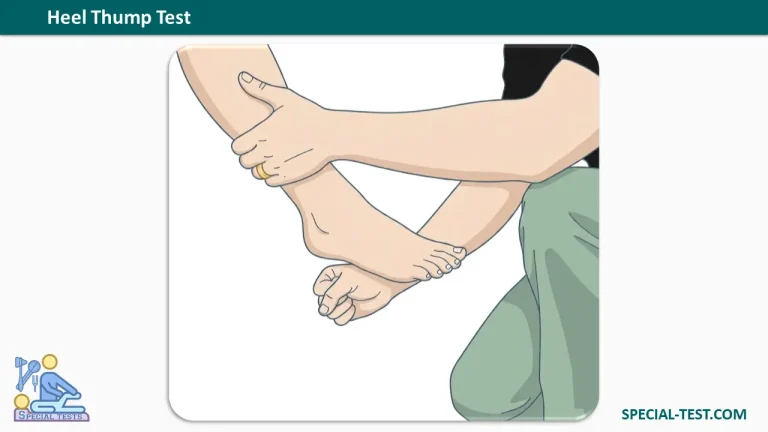
What is the Heel Thump Test?
The heel thump test (also known as the heel strike or bump test) is a specialized clinical orthopedic screening tool. It is primarily used to evaluate lower extremity injuries by helping clinicians:
- Differentiate a syndesmotic sprain (high ankle sprain) from a lateral ankle sprain.
- Screen for a potential tibial stress fracture or lower leg bone stress injury.
How to Perform the Heel Thump Test
Follow these steps to properly execute the clinical test:
- Patient Position: The patient should be seated or lying supine on an examination table with the leg relaxed.
- Stabilization: The examiner uses one hand to firmly stabilize the lower leg (tibia).
- Application of Force: Using the opposite hand or a loose fist, the examiner applies a firm, controlled tap or “thump” directly to the bottom of the patient’s heel.
- Alignment: Ensure the force travels upward along the long axis of the tibia, passing straight through the center of the heel.
Interpreting Test Results
Understanding what a positive test means helps guide further medical imaging or diagnosis:
- Ankle Pain: Localized pain or discomfort experienced in the ankle joint area typically indicates a syndesmosis injury (high ankle sprain).
- Tibial Pain: Pain radiating or localized along the shaft of the shinbone usually points toward a tibial stress fracture.
Disclaimer: This guide is for educational purposes only. If you are experiencing persistent lower leg or ankle pain, consult a qualified physical therapist or orthopedic specialist for an accurate diagnosis.
References
- Mulligan, Edward. (2011). Evaluation and management of ankle syndesmosis injuries. Physical Therapy in Sport, 12(2), 57-69.
- Clinical Tests for the Musculoskeletal System, 3rd Edition.
- Dutton’s Orthopaedic Examination, Evaluation, And Intervention, 3rd Edition.