The External Rotation Test for High Ankle Sprains: Purpose, Technique, and Accuracy
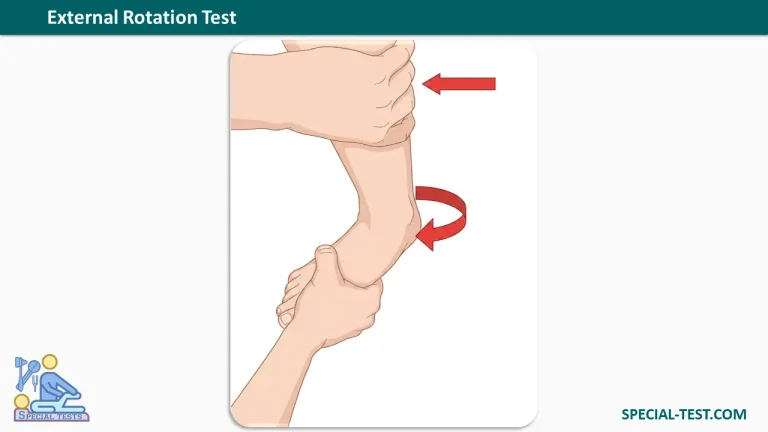
The External Rotation Test (often associated with the Kleiger test) is a crucial orthopedic examination used by physical therapists, athletic trainers, and physicians to evaluate ankle stability. Specifically, it assesses the integrity of the distal tibiofibular syndesmotic ligaments, which are commonly injured in high ankle sprains.
What is the External Rotation Test?
The external rotation test is designed to demonstrate the integrity of the syndesmotic ligaments (the high ankle ligaments holding the tibia and fibula together).
Stress applied to the ankle joint during this test separates the tibia and fibula, reproducing pain if these stabilizing ligaments have been torn, stretched, or strained.
How to Perform the External Rotation Test
Follow these step-by-step instructions to properly administer the test during a clinical examination:
- Patient Positioning: Have the patient sit comfortably on the edge of the examination table with their knee flexed to 90 degrees and the lower leg hanging freely.
- Ankle Stabilization: Hold the patient’s foot and lock the ankle in a neutral position (90 degrees).
- Applying Stress: Gently grasp the foot and rotate it laterally (outward/externally) as far as comfortably possible while keeping the ankle in neutral.
What is a Positive Result?
- Positive Finding: A test is considered positive if the patient experiences localized pain over the syndesmosis (the front or lateral aspect of the high ankle area).
- Clinical Note: Reproduction of pain in the syndesmotic region indicates a potential high ankle sprain or syndesmotic injury.
Test Accuracy & Diagnostic Value
Understanding the diagnostic accuracy of orthopedic tests helps clinicians interpret clinical findings more reliably:
- Sensitivity: 20% (A negative result does not completely rule out a syndesmotic injury).
- Specificity: 84% (A positive result is fairly reliable in confirming syndesmotic involvement).
References
- Błasiak, Adrian & Sadlik, Boguslaw & Brzoska, Roman. (2013). Injuries of the distal tibio-fibular syndesmosis. Polish Orthopedics & Traumatology, 78, 139-150.