Ankle Anterior Drawer Test: Purpose, Technique, and Positive Results
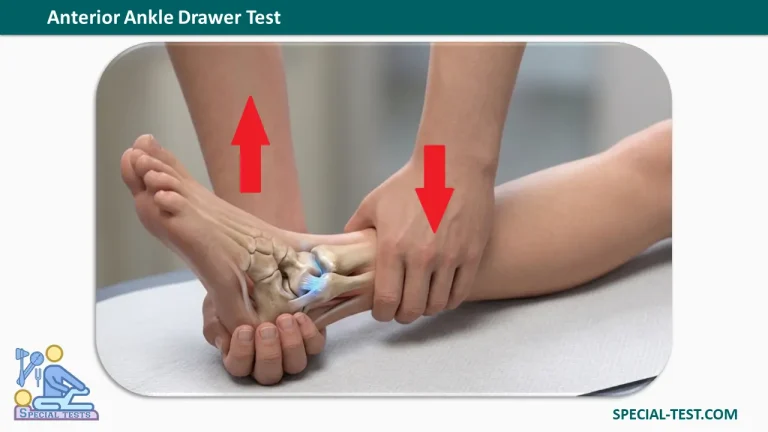
What is the Ankle Anterior Drawer Test?
The Ankle Anterior Drawer Test is a standard clinical orthopedic examination used to assess stability and identify injuries to the lateral ligaments of the ankle—most notably the anterior talofibular ligament (ATFL).
Healthcare providers and physical therapists frequently use this test during musculoskeletal evaluations following acute ankle sprains or when investigating chronic ankle instability.
How to Perform the Ankle Anterior Drawer Test
To ensure accuracy and patient comfort during the examination, follow these step-by-step instructions:
- Patient Position: The patient lies supine (on their back) on the examination table with the lower leg relaxed and the foot hanging loosely off the edge.
- Stabilization: The examiner uses one hand to firmly stabilize the distal tibia and fibula (the lower shin).
- Foot Positioning: The examiner holds the patient’s heel and positions the foot in approximately 15° to 20° of plantar flexion.
- The Maneuver: The examiner gently but firmly pulls (draws) the talus and foot forward anteriorly within the ankle mortise while monitoring for abnormal movement or pain.
What is a Positive Ankle Anterior Drawer Test Result?
A positive test indicates a structural compromise of the ligamentous complex. Key indicators include:
- Excessive Anterior Translation: Noticeable forward movement of the talus compared to the uninjured side, often accompanied by a soft or mushy end-feel.
- The “Dimple” or “Suction” Sign: In cases where pain and muscle guarding are minimal, a visible dimpling or suction effect may appear over the anterolateral joint line as the talus translates forward.
References
- Polzer, H., et al. (2012). Diagnosis and treatment of acute ankle injuries: Development of an evidence-based algorithm. Orthopedic Reviews, 4(1), e5.
- Buckup, K. Clinical Tests for the Musculoskeletal System, 3rd Edition.
- Dutton, M. Dutton’s Orthopaedic Examination, Evaluation, And Intervention, 3rd Edition.